Somewhere north of the Mackinac Bridge, I paid four dollars for a lesson in what not to do.
It came wrapped in wax paper from a little roadside stand, still warm, and it looked perfect.
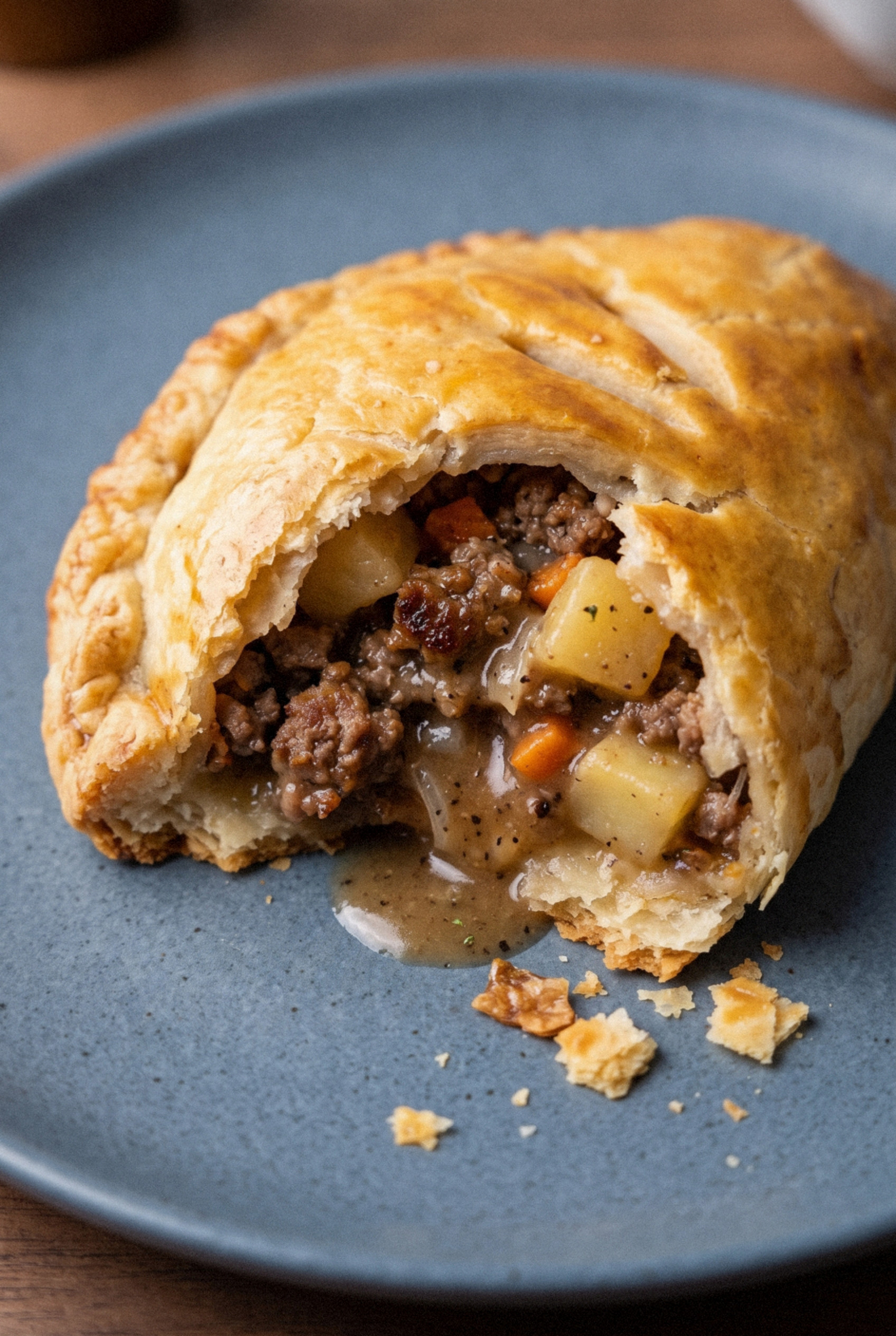
Then I bit in, and a shower of dry, gray crumbles fell straight into my lap.
The potato was half raw. The crust was doing all the work.
I’ve since learned that’s how a lot of recipes are built: raw beef and raw potato sealed into dough, then baked for an hour and hoped for.
Back in 2009 I shared a quick version here that leaned on that same shortcut, and it had the same problem.
So I went back to the stove and rebuilt it.
These ground beef pasties (say it PAST-ee, like the dough) start with a filling that’s fully cooked in one skillet.
A spoonful of flour and a splash of beef broth turn the pan drippings into a thick little gravy that clings to every piece of beef and potato.
Nothing rolls out when you bite. Nothing tastes dry.
My husband eats two for dinner and tucks a third into his lunch bag the next morning.
The all-butter crust is sturdy enough to crimp, flaky enough to shatter a little, and it freezes like a dream.
Make one batch and you’ll see why these keep showing up on my counter!
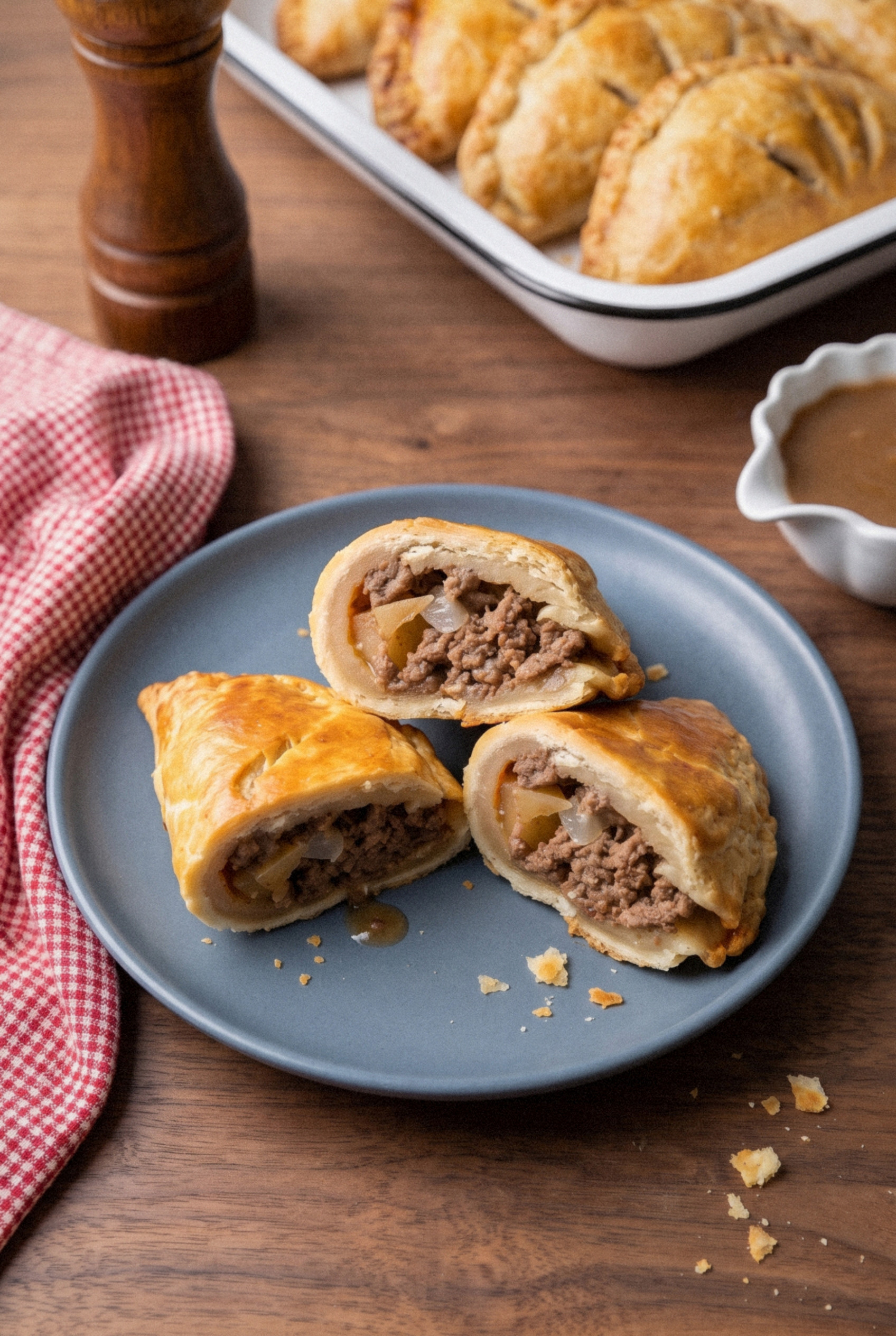
Table of contents
Why This Recipe Works
Every part of this pasty is built so the inside matches the outside. Here’s what makes this version different from the raw-filling recipes.
- The filling is precooked. The potatoes are tender before they ever hit the dough, so the bake only has to brown the crust. No crunchy centers.
- A pan gravy holds it all together. Just 1 tablespoon of flour and 2/3 cup of broth bind the ground beef, so it stays moist and spoonable instead of crumbly.
- The crust is all butter. It’s rich and flaky but still strong enough to hold a generous scoop of filling and a tight crimp.
- Shorter bake. About 30 to 35 minutes at 400°F instead of the full hour some recipes call for.
- Freezer friendly. Bake a double batch and you’ve got hand-held dinners ready for weeks.
What Is a Pasty?
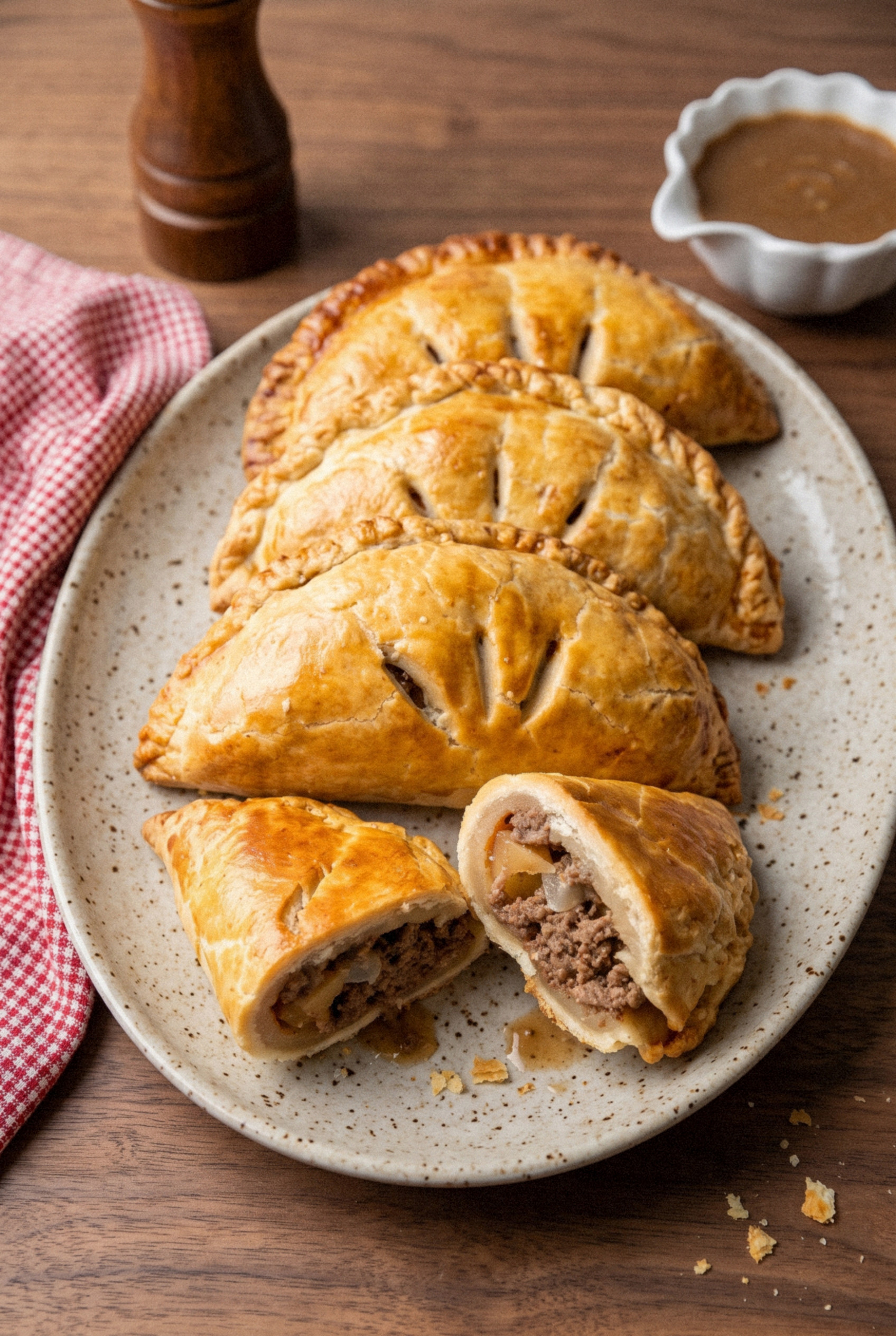
A pasty is a half-moon hand pie with a savory filling sealed inside a sturdy pastry. It comes from Cornwall, in the far southwest of England, where miners carried them underground as a complete meal they could eat with dirty hands.
The thick crimped edge worked like a handle, and some say the miners tossed it away when they were done.
When Cornish miners came to work the copper and iron mines of Michigan’s Upper Peninsula in the 1800s, the pasty came with them.
It’s still a local treasure up there, and you’ll see hand-painted “PASTIES” signs along the highways.
The traditional filling is beef, potato, onion and swede, which is what the British call rutabaga.
Ground beef makes it a weeknight-friendly version that cooks faster and costs less than diced steak.
Ingredients You’ll Need
You probably have most of this in your kitchen already. The exact amounts are in the recipe card below.
For the Crust
- All-purpose flour (3 cups). Regular flour gives a tender crust that still holds its shape. Spoon it into the cup and level it so you don’t pack in too much.
- Salt (1 teaspoon). Unseasoned pastry tastes flat next to a savory filling.
- Cold unsalted butter (1 cup). It needs to be COLD, cut into cubes and straight from the fridge. Those little pieces of butter are what make the layers.
- Egg yolk (1). It makes the dough a bit richer and easier to roll without cracking.
- Ice water (1/2 to 2/3 cup). Add it slowly. You want a dough that holds together when you squeeze it, not a sticky one.
Short on time? Two boxes of refrigerated pie crust (4 rounds) will work. You’ll get 4 large pasties or 6 smaller ones if you reroll the scraps.
For the Filling
- 80/20 ground beef (1 pound). I don’t use lean beef here. That little bit of fat is where the gravy gets its flavor, and lean beef bakes up dry.
- Yukon Gold potatoes (about 12 ounces). They hold their shape and taste buttery. Dice them small, about 1/4 inch, so they cook quickly and pack neatly into the crust.
- Carrot (1 medium). Adds a little sweetness and color. Swap in 1/2 cup of diced rutabaga for a more traditional pasty.
- Yellow onion (1 medium). Finely diced so it melts into the filling.
- Garlic (2 cloves). Not traditional, but I love what it does for ground beef.
- All-purpose flour (1 tablespoon). This is the gravy builder. It thickens the broth into something that coats the filling.
- Beef broth (2/3 cup). Low-sodium is best so you control the salt.
- Worcestershire sauce (1 tablespoon). Deep, savory, a little tangy. It makes the beef taste beefier.
- Dried thyme and rosemary. Just 1/2 teaspoon thyme and 1/4 teaspoon crushed rosemary. Enough to smell like Sunday dinner without taking over.
- Salt and black pepper. Taste the filling before it cools and adjust. Pastry mutes seasoning, so it should taste a little bold on its own.
For the Egg Wash
- Egg (1 large) plus water (1 tablespoon). Whisked together and brushed over the tops for that shiny, deep golden finish. It also glues the edges shut.
How to Make Ground Beef Pasties
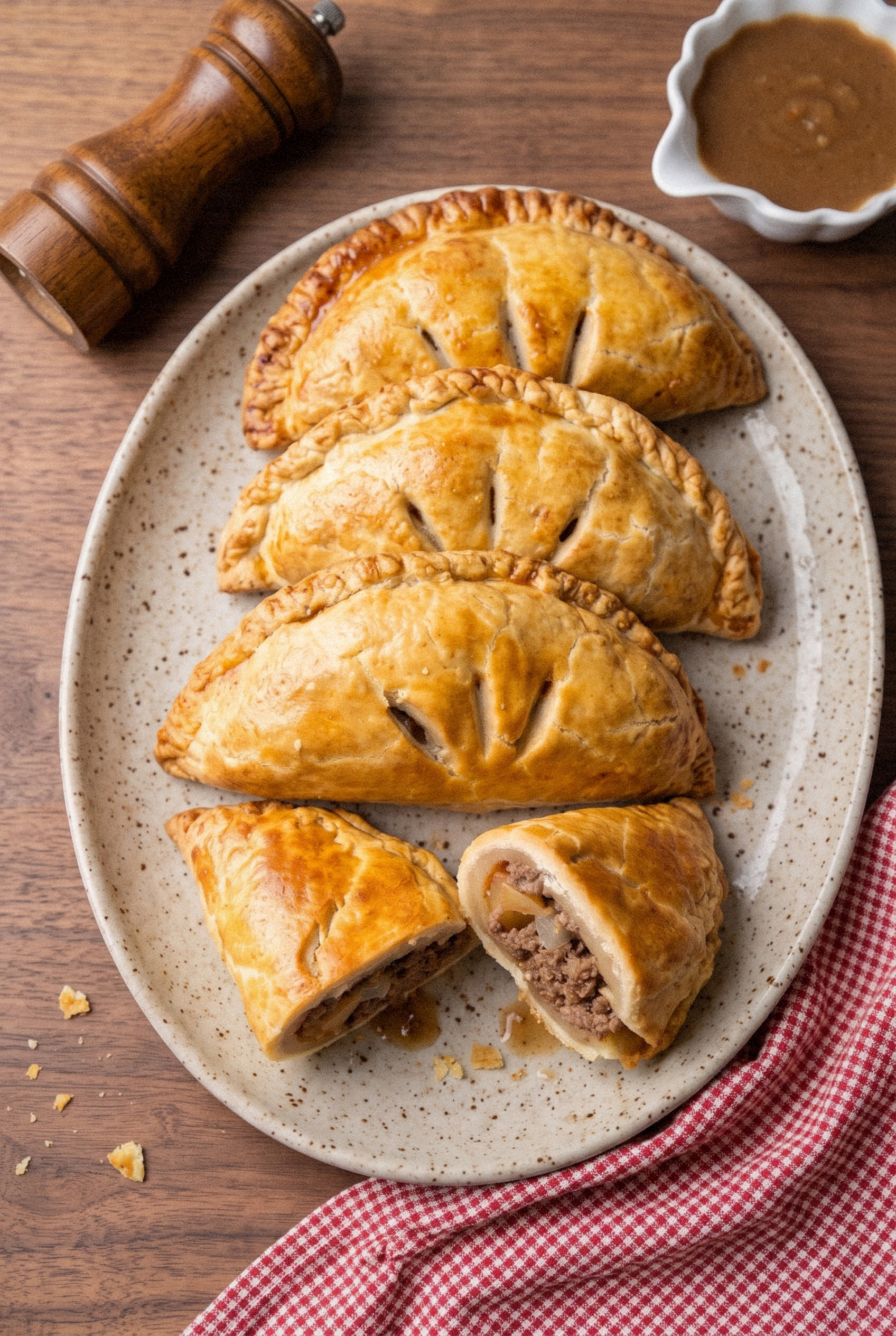
There are three stages: dough, filling, then assembly. The dough and the filling both need to chill, so I make them first and do something else while they rest.
Step 1: Make and Chill the Dough
Whisk the flour and salt in a large bowl. Add the cold butter cubes and cut them in with a pastry blender or your fingertips until the mixture looks like coarse crumbs with some pea-size pieces of butter left.
Whisk the egg yolk into 1/2 cup of ice water and drizzle it over the flour, tossing with a fork. Add more water a tablespoon at a time until a handful holds together when you squeeze it.
Divide the dough into 6 equal pieces, flatten each into a disk, wrap them and chill for at least 1 hour.
Pro tip: A food processor works too. Pulse in short bursts so the butter stays in pieces.
Step 2: Cook the Filling and Build the Gravy
Heat the oil in a large skillet over medium-high heat. Add the ground beef with a pinch of salt and break it into small crumbles, cooking until it’s browned, about 5 to 6 minutes. Leave the fat in the pan unless there’s a lot of it.
Add the onion, potatoes and carrot. Cook, stirring now and then, for 6 to 8 minutes, until the onion is soft and the potatoes are starting to turn tender at the edges. Stir in the garlic, thyme and rosemary for 1 minute.
Sprinkle the flour over everything and stir for 1 minute. Pour in the broth and Worcestershire, scrape up the browned bits, then cover and simmer on medium-low for 5 to 7 minutes, until a potato cube mashes easily and the gravy is thick enough to coat the spoon.
Step 3: Cool the Filling
Spread the filling on a plate or sheet pan and let it cool until it’s no longer warm, about 20 to 30 minutes. You can speed it up in the fridge.
This step matters more than anything else. Warm filling melts the butter in the dough, and melted butter means a soft, greasy crust that tears.
Season it once more now. It should taste a touch saltier than you’d want to eat with a spoon.
Step 4: Roll, Fill and Crimp
Heat the oven to 400°F and line a baking sheet with parchment. Work with one piece of dough at a time and leave the rest in the fridge. Roll it on a lightly floured counter into an 8-inch round, a little under 1/4 inch thick.
Spoon about 2/3 cup of filling onto one half, leaving a 1/2-inch border. Brush the border with egg wash, fold the other half over and press the edges together. Crimp with a fork, or fold the edge over itself in little pleats for the classic rope look.
Move each pasty to the baking sheet and cut 3 small slits in the top so steam can escape.
Step 5: Egg Wash and Bake
Brush the tops and sides with the remaining egg wash. Bake for 30 to 35 minutes, until the crust is deep golden brown all over, including the crimped edges.
Let the pasties rest on the pan for 10 minutes. The filling is very hot inside, and the rest lets the gravy settle so it doesn’t run when you cut in.
Pale crust? Give it five more minutes.
Precooked vs. Raw Filling
Do you precook the meat for pasties? For ground beef, I always do. The recipes online split almost evenly on this one.
The traditional Cornish method puts raw diced steak and raw sliced potato into the dough and bakes it low and slow, often close to an hour. Steak can handle that because it braises in its own juices.
Ground beef behaves differently. It releases its fat fast, then tightens into dry little pebbles while the potatoes are still catching up.
Precooking solves both problems at once. The potatoes get tender on the stove, the beef browns for flavor, and the gravy keeps it all juicy inside the crust.
It also means the pasties only need about half an hour in the oven. Who doesn’t love that?
Another handmade pocket I love is homemade pierogi, filled with potato and cheddar.
Which Crust Should You Use?
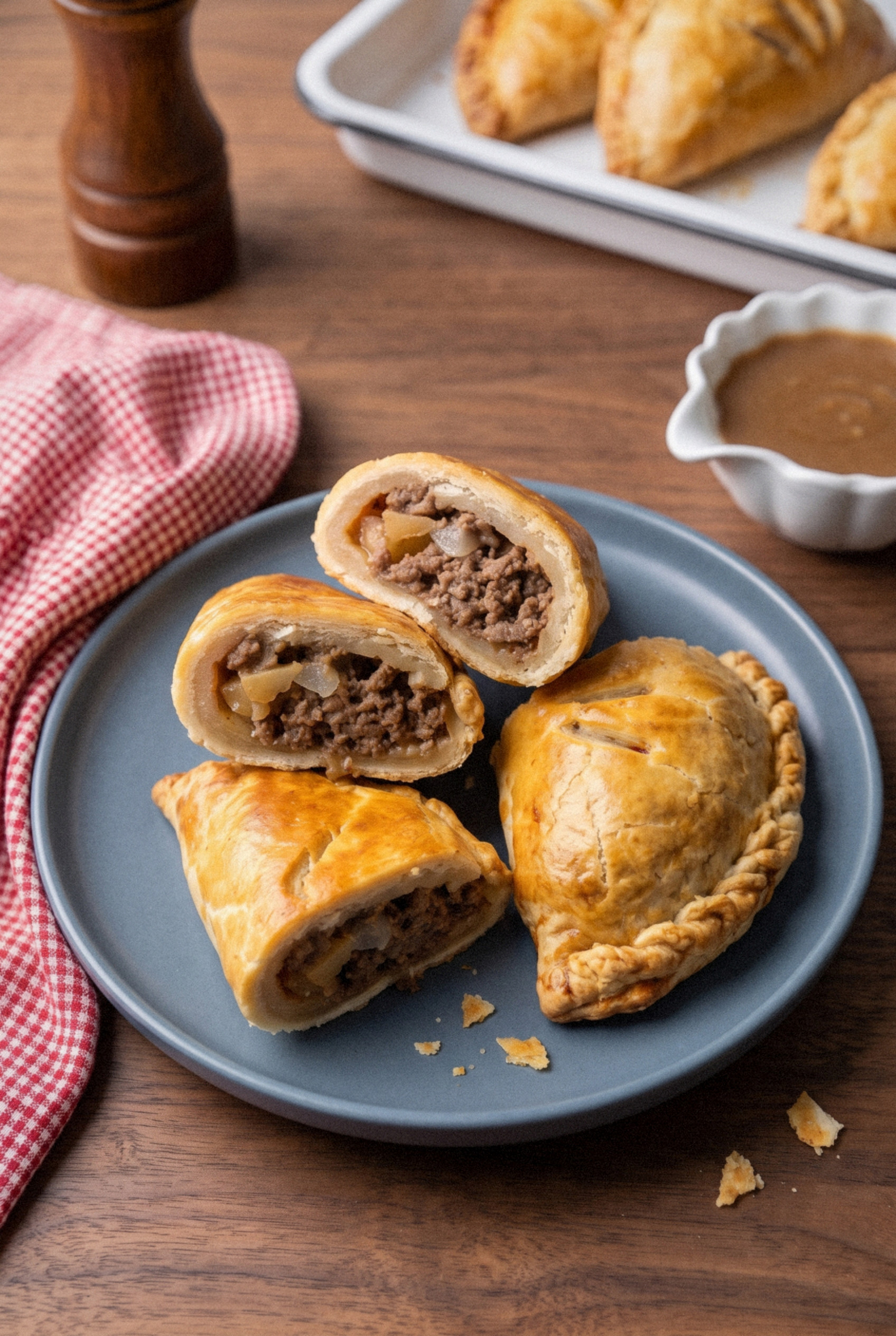
Homemade all-butter crust is my favorite, but it’s not the only option. Here’s how the common choices stack up.
- All-butter homemade. The best flavor and a crisp, flaky bite. Takes about 15 minutes plus chilling. This is the one in the recipe card.
- Buttermilk pie crust. Slightly more tender and a little tangy. Swap buttermilk for the ice water and skip the egg yolk.
- Shortening or lard. Very tender and easy to roll, with a more old-fashioned taste. Lard is the choice in a lot of Upper Peninsula pasty shops.
- Refrigerated pie crust. The super easy route. It’s thinner, so use a little less filling and bake about 25 minutes.
- Puff pastry. Light and crackly, almost like a turnover. It puffs a lot, so seal it well and bake at 400°F for about 20 to 25 minutes.
Tips for Pasties That Don’t Leak
A leaky pasty is almost always a sealing or temperature problem. These are the habits that keep mine intact.
- Keep the dough cold. If it gets soft and sticky while you roll, pop it back in the fridge for 10 minutes.
- Cool the filling completely. Warm filling is the number one reason crusts tear.
- Don’t overfill. I know it’s tempting. Leave that 1/2-inch border clean so the edges can stick.
- Glue the seam. Egg wash on the border works better than water. Press firmly, then crimp.
- Cut vents. Without slits, steam builds and blows out the weakest part of the seam.
- Bake on parchment. If a little gravy does escape, it won’t weld the pasty to the pan.
- Check the temperature. The beef is cooked before baking, but the center should still read 165°F before serving, especially when baking from frozen.
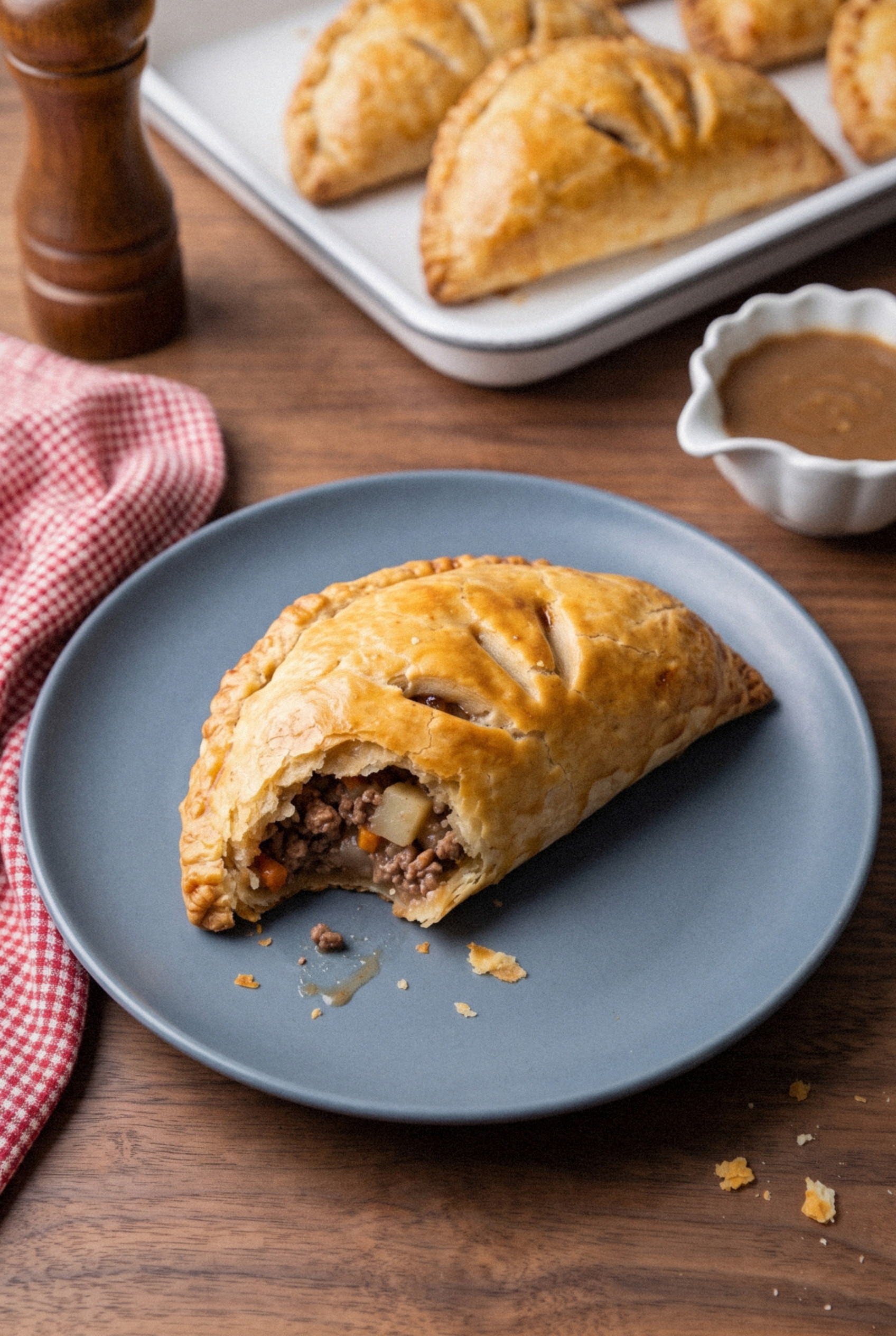
Variations
Once you’ve made the basic version, it’s a great way to use up odds and ends. A few of my favorites:
- Go traditional. Replace the carrot with 1/2 cup of diced rutabaga for that sweet, peppery Cornish flavor.
- Add peas. Stir 1/2 cup of frozen peas into the filling right before it cools.
- Make them cheesy. Sprinkle a little shredded sharp cheddar over the filling before you fold.
- Swap the meat. Half ground pork or breakfast sausage adds richness.
- Mini pasties. Roll the dough into 5-inch rounds for about 12 party-size hand pies. Start checking them at 20 minutes.
What to Serve with Pasties
A pasty is a full meal on its own, but a little something on the side is nice. Here’s what shows up on my table.
- Brown gravy. The classic Michigan move is a ladle of gravy right over the top.
- Ketchup. Yes, really. It’s how a lot of Yoopers eat them, and my kids agree.
- Malt vinegar. A few dashes cuts through the richness. Try it before you judge.
- Coleslaw or a green salad. Something crisp and cool pairs perfectly with the warm crust.
- Pickles. Dill spears or pickled beets for a tangy bite.
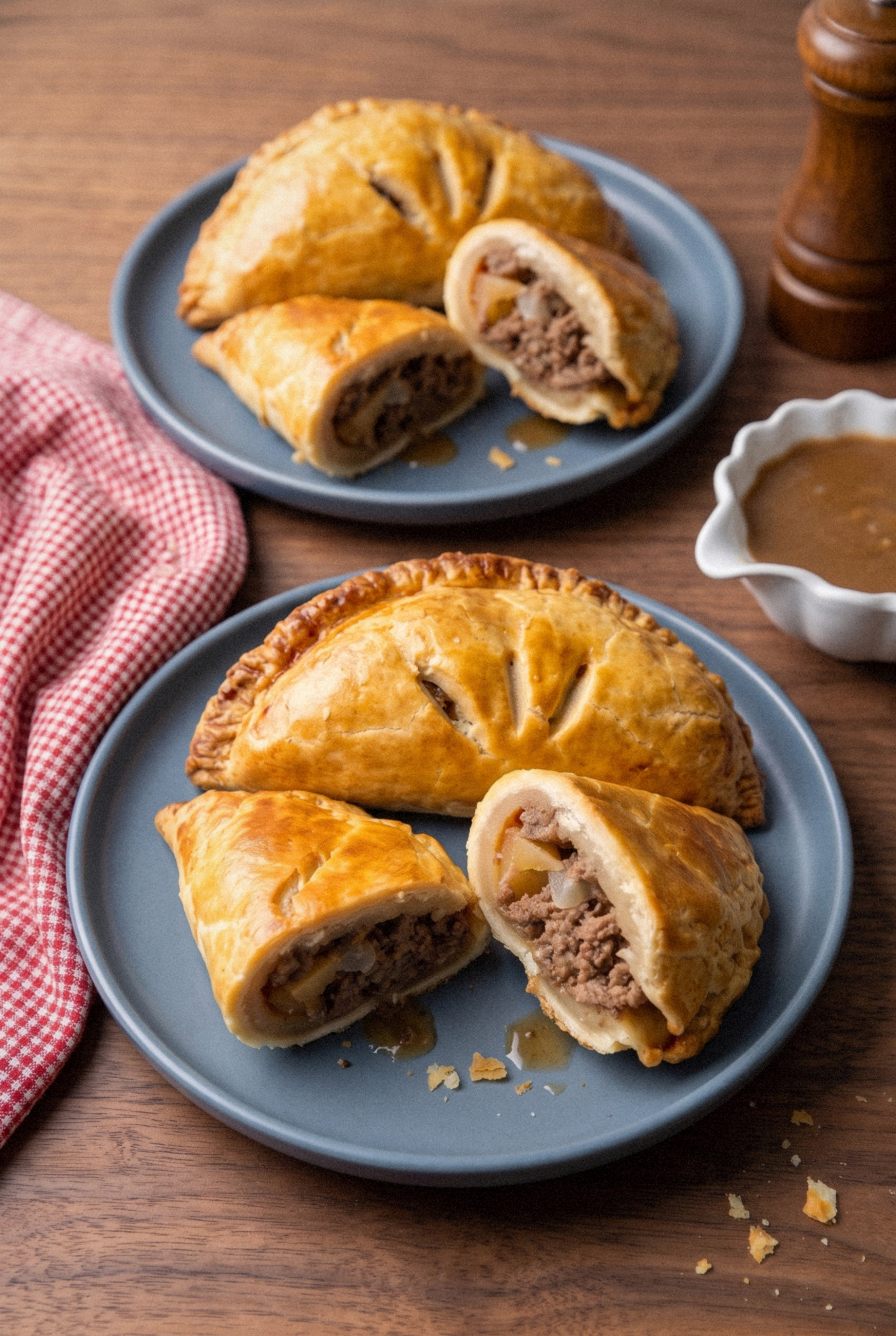
Make Ahead, Storing and Freezing
Pasties were made to travel, so they store and reheat beautifully. Plan ahead and you’ll have lunches for the week.
- Make ahead. The dough keeps in the fridge for 2 days, and the filling keeps for 2 days too. Assemble and bake when you’re ready.
- Refrigerator. Baked pasties keep in an airtight container for 3 to 4 days.
- Freeze baked. Cool completely, wrap each pasty, then store in a freezer bag for up to 3 months.
- Freeze unbaked. Assemble but skip the egg wash. Freeze on the baking sheet until firm, then bag. Brush with egg wash and bake from frozen at 400°F for 45 to 50 minutes.
- Reheat. Use the oven, not the microwave. 350°F for 15 minutes from the fridge or about 25 to 30 minutes from frozen keeps the crust crisp.
FAQ
Do you precook the meat for pasties?
For ground beef, yes. Browning it first with the vegetables and a little gravy keeps the filling moist and means the potatoes are already tender. Traditional steak pasties often go in raw because diced steak holds up to a long bake.
What is the best meat for pasties?
Traditional Cornish pasties use beef skirt or chuck. For a faster, budget-friendly version, 80/20 ground beef is my pick because the fat keeps it juicy. Lean beef works but can taste dry.
Can I use store-bought pie crust or puff pastry?
Absolutely. Refrigerated pie crust gives you thinner, slightly smaller pasties. Puff pastry makes a lighter, flakier version that bakes in about 20 to 25 minutes.
Can you freeze pasties?
Yes, baked or unbaked. Baked pasties freeze for up to 3 months. Unbaked ones go straight from the freezer to the oven with a fresh coat of egg wash.
How do you reheat pasties without a soggy crust?
Reheat them in a 350°F oven on a baking sheet for about 15 minutes from the fridge. The microwave warms the filling but softens the pastry.
Can these be made ahead of time?
Yes. Make the dough and filling up to 2 days ahead, or assemble the pasties and freeze them unbaked so they’re ready whenever you need them.
What is the difference between rutabaga, swede and turnip?
Rutabaga and swede are the same yellow-fleshed root, with rutabaga being the American name. Turnips are smaller and white, with a sharper taste. In Cornwall people sometimes call swede “turnip,” which is why recipes mix up the names.
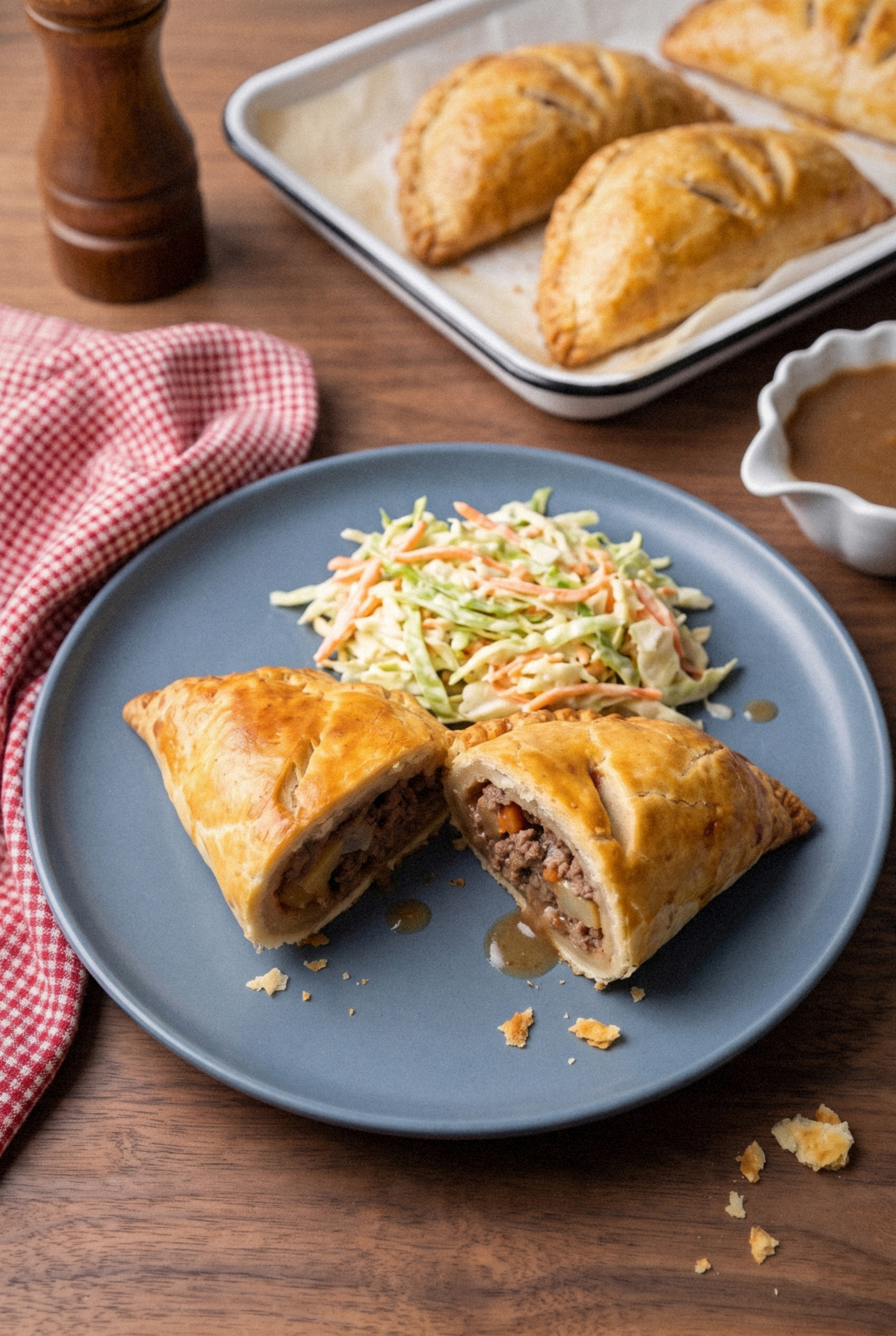
Ground Beef Pasties with Flaky Butter Crust and Gravy
Ingredients
For the Crust
- 3 cups all-purpose flour spooned and leveled, plus more for rolling
- 1 teaspoon salt
- 1 cup cold unsalted butter 2 sticks, cut into 1/2-inch cubes
- 1 large egg yolk
- 1/2 to 2/3 cup ice water
For the Filling
- 1 tablespoon olive oil
- 1 pound ground beef 80/20
- 1 medium yellow onion finely diced
- 12 ounces Yukon Gold potatoes about 2 medium, peeled and cut into 1/4-inch dice
- 1 medium carrot peeled and cut into 1/4-inch dice, or 1/2 cup diced rutabaga
- 2 cloves garlic minced
- 1/2 teaspoon dried thyme
- 1/4 teaspoon dried rosemary crushed
- 1 tablespoon all-purpose flour
- 2/3 cup low-sodium beef broth
- 1 tablespoon Worcestershire sauce
- 3/4 teaspoon salt or to taste
- 1/2 teaspoon black pepper
For the Egg Wash
- 1 large egg
- 1 tablespoon water
Instructions
Make the Dough
- Whisk the flour and salt in a large bowl. Cut in the cold butter with a pastry blender or your fingertips until the mixture looks like coarse crumbs with some pea-size pieces of butter.
- Whisk the egg yolk into 1/2 cup ice water and drizzle over the flour, tossing with a fork. Add more water 1 tablespoon at a time until the dough holds together when squeezed.
- Divide the dough into 6 equal pieces, flatten each into a disk, wrap and refrigerate for at least 1 hour.
Make the Filling
- Heat the oil in a large skillet over medium-high heat. Add the ground beef with a pinch of the salt and cook, breaking it into small crumbles, until browned, 5 to 6 minutes. Spoon off excess fat if there is a lot.
- Add the onion, potatoes and carrot and cook, stirring occasionally, for 6 to 8 minutes, until the onion is soft. Stir in the garlic, thyme and rosemary and cook 1 minute.
- Sprinkle in the flour and stir for 1 minute. Add the broth, Worcestershire, remaining salt and the pepper, scraping up the browned bits. Cover and simmer over medium-low for 5 to 7 minutes, until the potatoes are tender and the gravy is thick.
- Spread the filling on a plate or sheet pan and cool completely, 20 to 30 minutes. Taste and adjust the seasoning.
Assemble and Bake
- Heat the oven to 400°F and line a baking sheet with parchment paper. Whisk the egg and water for the egg wash.
- Roll one piece of dough on a lightly floured surface into an 8-inch round, a little under 1/4 inch thick. Keep the remaining dough chilled.
- Spoon about 2/3 cup of filling onto one half of the round, leaving a 1/2-inch border. Brush the border with egg wash, fold the dough over and press to seal. Crimp with a fork or pleat the edge. Repeat with the remaining dough and filling.
- Place the pasties on the baking sheet, cut 3 small slits in each top and brush with egg wash.
- Bake for 30 to 35 minutes, until deep golden brown. Rest 10 minutes before serving.
Notes
- Total time: Includes 1 hour of chilling for the dough while the filling cooks and cools.
- Store-bought crust: Two boxes of refrigerated pie crust (4 rounds) make 4 large pasties. Bake about 25 minutes.
- Storage: Refrigerate baked pasties up to 4 days. Reheat at 350°F for about 15 minutes.
- Freezing: Freeze baked pasties up to 3 months, or freeze unbaked (no egg wash) and bake from frozen at 400°F for 45 to 50 minutes after brushing with egg wash.
- Doneness: The center should reach 165°F, especially when baking from frozen.