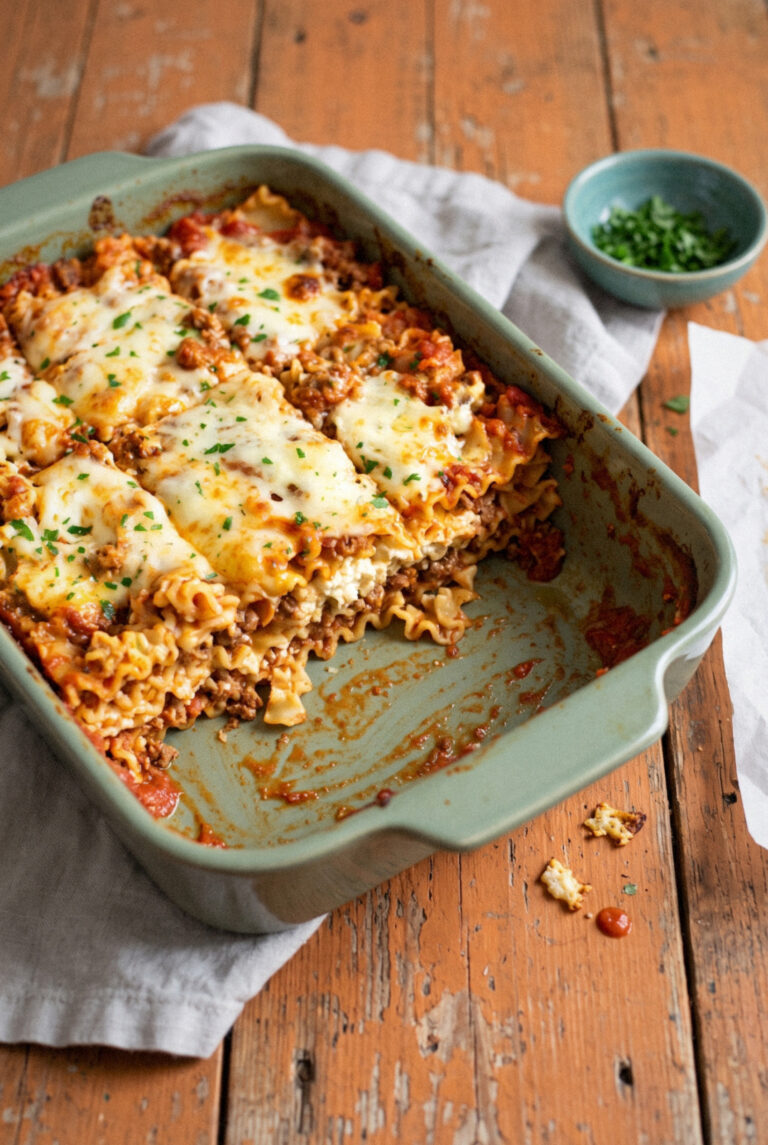
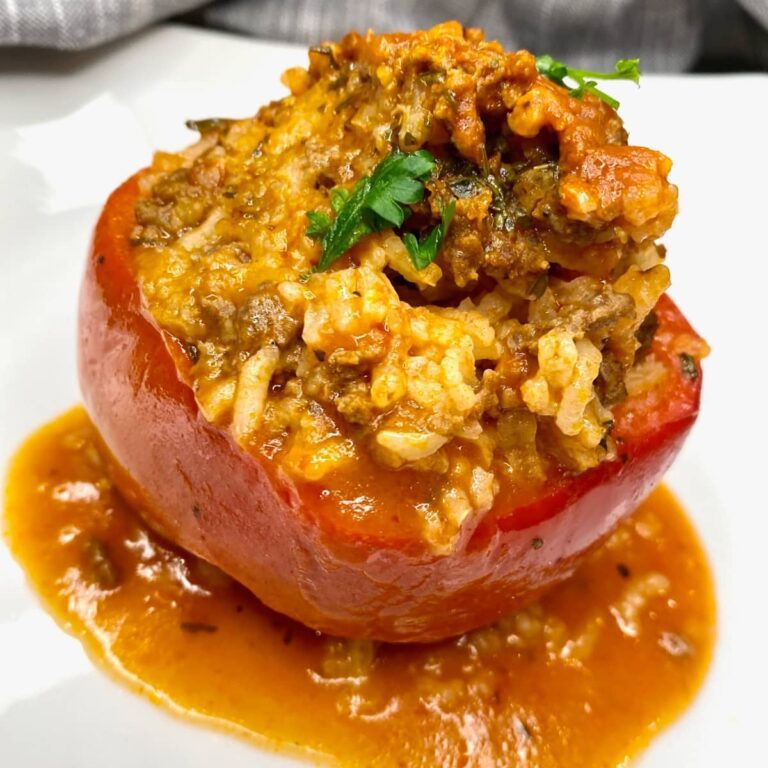
The pan I grew up eating from was a brick of ricotta and stretchy mozzarella, and its squares slid into a puddle the second they hit the plate.
So the first time I made lasagna Bolognese, I kept waiting for a cheese pull that never came.
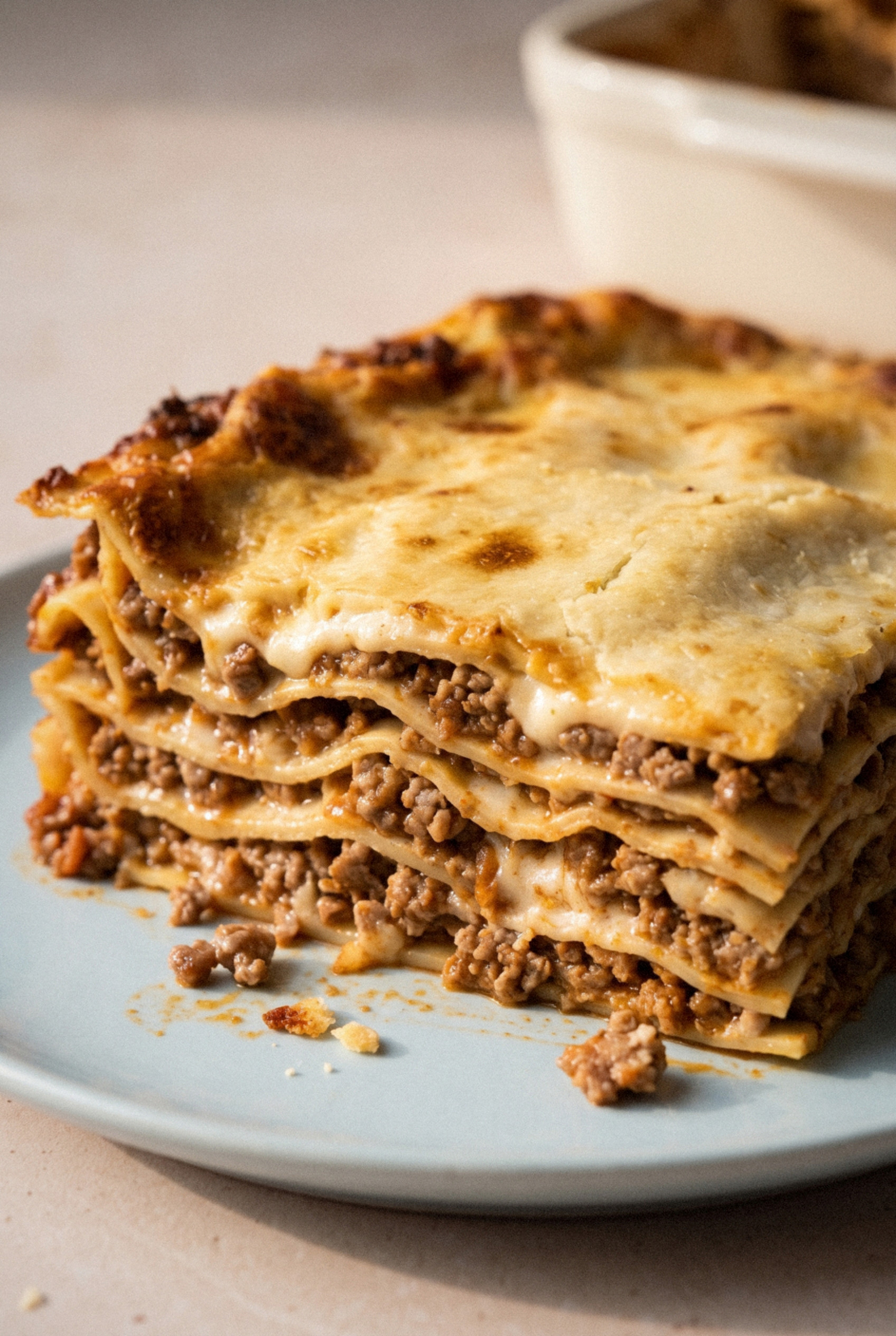
Well, I loved that old pan, but what showed up instead was better.
Thin sheets of pasta, a meaty ragu that had simmered all afternoon, and a silky bechamel held every layer in place.
There was no ricotta and no mozzarella, just Parmigiano browned on top, and it was phenomenal.
I’ve made it every few weeks since, and my family now asks for “the Italian one” by name.
The trouble is that most recipes push you to one of two extremes.
One big brand page rushes the ragu through a 30-minute simmer, and the flavor shows it.
The scratch versions want homemade spinach pasta and a two-day game plan.
My version lands right in the middle: a real slow ragu with milk, a pourable bechamel, and no-boil sheets you simply lay in the dish.
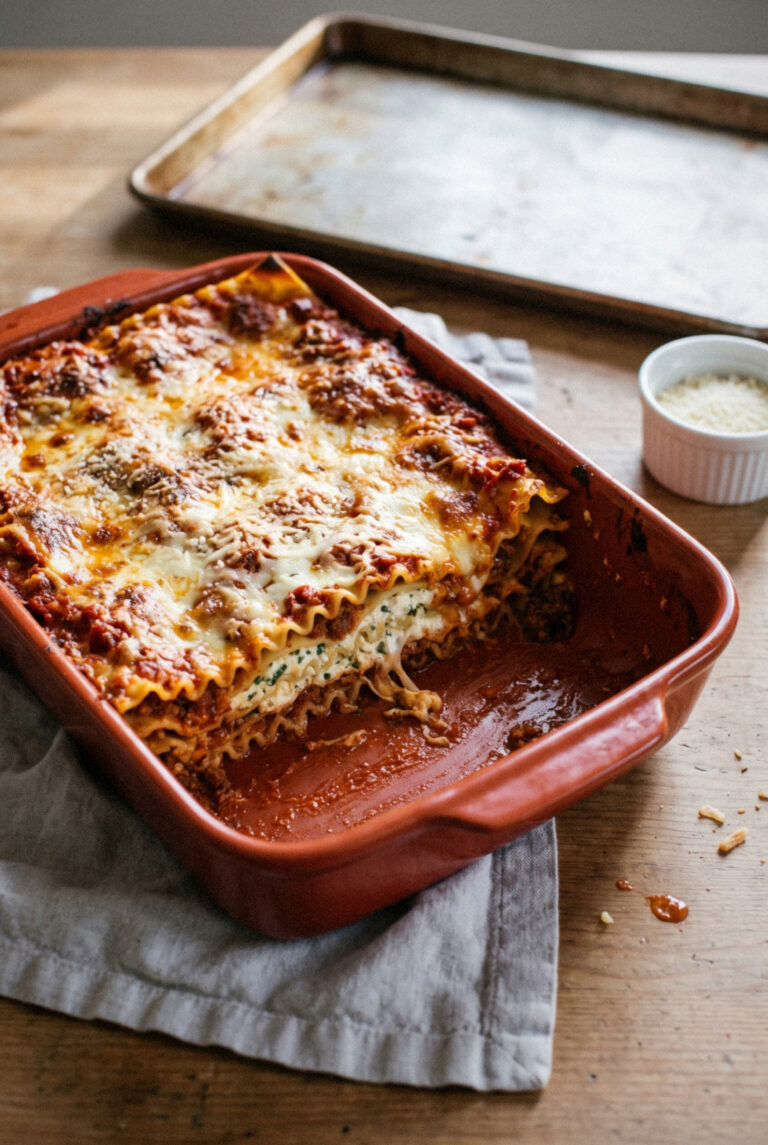
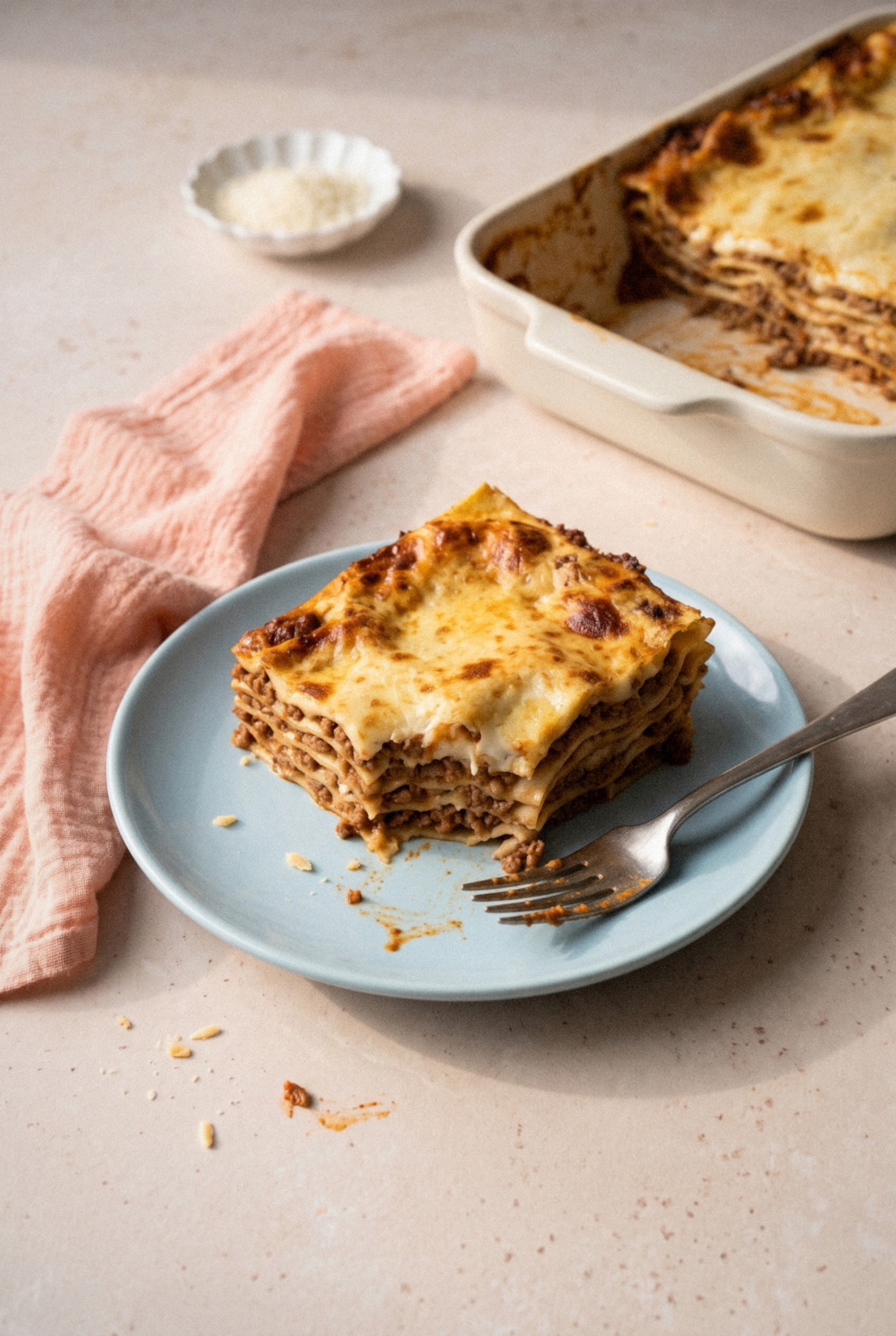
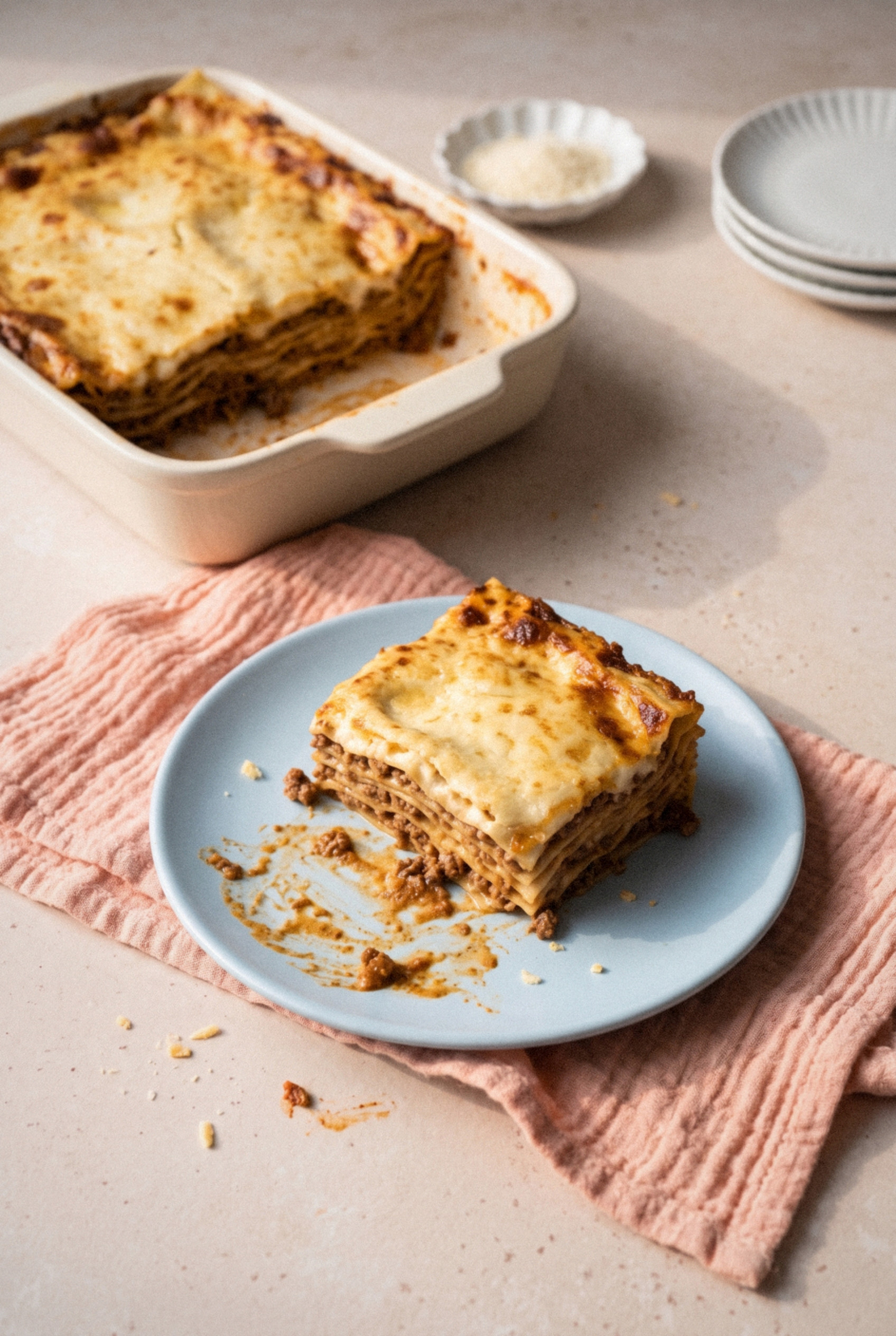
It’s a Sunday afternoon project, not a weekend-long one, and it cuts into tidy squares that show off every layer.
Make it once and you’ll see why the cheese never needed to be there!
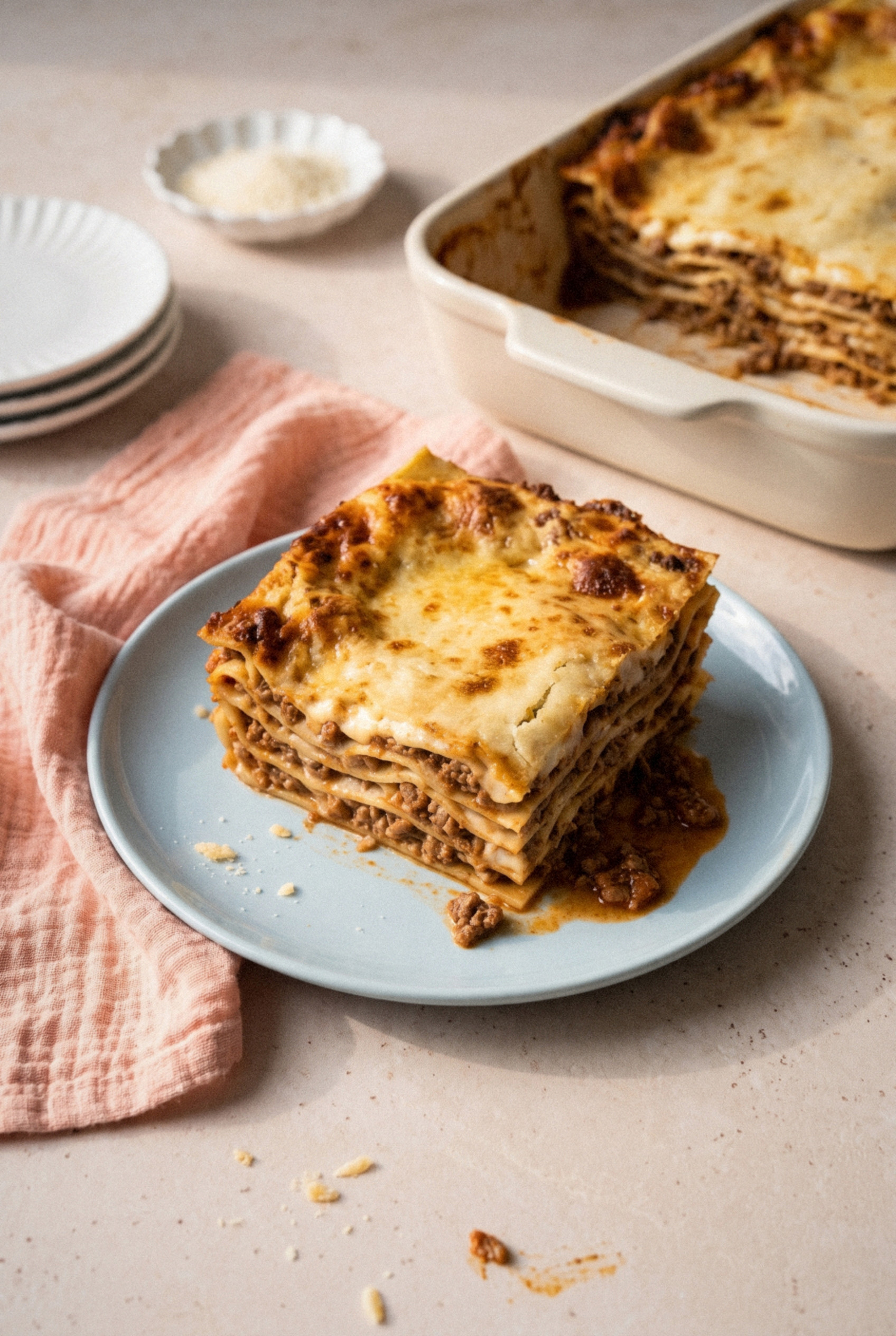
Table of contents
What Makes Lasagna Bolognese Different
Lasagna Bolognese is the baked lasagna of Bologna, and it’s built from just four things. Pasta, ragu, bechamel and Parmigiano-Reggiano, layered thin and repeated until the dish is full.
The American version most of us know leans on tomato-heavy meat sauce, thick ricotta and a blanket of mozzarella.
The Bologna version swaps all that cheese for bechamel, a creamy white sauce of butter, flour, milk and nutmeg.
- The ragu. A slow-cooked meat sauce where the meat is the point and the tomato is a supporting player.
- The bechamel. It does the job ricotta does in American lasagna, binding the layers and keeping them moist.
- The cheese. Only Parmigiano-Reggiano, grated fine and scattered between layers and over the top.
- The pasta. Thin sheets, and lots of layers of them, rather than a few thick ribbons.
In Bologna, the classic is lasagne verdi alla bolognese, made with green spinach egg pasta.
You’ll also see it spelled lasagne, which is the Italian plural, since one sheet is a lasagna.
Is mine authentic? It’s faithful to the structure and the ragu method, and I’m upfront that the no-boil sheets are a home-cook shortcut.
Ingredients You Need
Everything here is a regular grocery store item. You’ll build three components, so I’ve grouped the ingredients the same way.
For the Ragu
- Olive oil and butter (2 tablespoons each). The oil keeps the butter from scorching while the soffritto cooks low and slow.
- Pancetta (4 ounces). Finely diced, it renders into the base and adds a salty, cured depth you can’t get from ground meat alone.
- Onion, carrot and celery. One medium onion, one medium carrot and one celery rib, all finely diced. This is the soffritto, and it gives the ragu its quiet sweetness.
- Ground beef and ground pork (1 pound each). Beef brings the savory backbone and pork keeps the sauce tender after hours of simmering.
- Whole milk (1 cup). It goes in before the wine and tomato, and it’s the step that makes the meat soft and mellow.
- Dry white wine (3/4 cup). A Pinot Grigio or Sauvignon Blanc lifts the richness without turning the sauce purple.
- Tomato paste (2 tablespoons) and passata (one 28-ounce can or bottle). Enough tomato to color the sauce a deep brick red, not so much that it tastes like marinara.
- Chicken broth or water (1 cup). It keeps the long simmer from going dry.
- Bay leaf, salt and pepper. One bay leaf, 1 teaspoon kosher salt to start and 1/4 teaspoon black pepper.
For the Bechamel
- Unsalted butter and all-purpose flour (6 tablespoons each). Equal amounts make a smooth roux that won’t go lumpy.
- Whole milk (4 cups), warmed. Warm milk whisks in faster and smoother than cold.
- Kosher salt (1 teaspoon) and nutmeg (1/4 teaspoon). Freshly grated nutmeg is non-negotiable for me. It’s the little warm note that makes bechamel taste like bechamel.
For Assembly
- No-boil lasagna sheets (about 15 sheets). One 9-ounce box covers five layers in a 13×9-inch dish.
- Parmigiano-Reggiano (2 cups, about 6 ounces), finely grated. Buy a wedge and grate it yourself. The pre-shredded kind won’t melt into the layers the same way.
- Unsalted butter (1 tablespoon). For greasing the dish and dotting the top so it browns in spots.
Ingredient Notes and Swaps
- No pork? Use 2 pounds of 80/20 ground beef. It’s a little firmer but still wonderful.
- White wine vs red. White is the Bologna habit and keeps the flavor bright. A dry red like Chianti works too, it just makes a darker, heavier sauce.
- Passata vs crushed tomatoes. Passata gives a smoother ragu that spreads in thin layers. Crushed tomatoes work fine if that’s what you have.
- Whole milk only. Skim or 2% makes a thin, sad bechamel. This is not the place to cut back.
- Parmesan vs Parmigiano-Reggiano. Domestic Parmesan works in a pinch, but real Parmigiano tastes nuttier and browns better.
- What about garlic? Traditional ragu skips it, and so do I. If your family insists, add 2 cloves with the soffritto.
- Can you add ricotta? You can, and nobody’s going to arrest you! Stir 1 cup ricotta into the bechamel to keep the layers thin. Just know it pushes the dish back toward the American style.
Choosing the Pasta
No-boil sheets are my default, and they work so well here. They’re thin, they soften in the oven, and they skip the whole pot-of-boiling-water step.
So do you need to boil the noodles? Not with no-boil sheets.
The ragu and bechamel bring plenty of moisture, and the sheets drink it up as they bake.
Fair warning: no-boil sheets need sauce on every inch, edges included, or the corners stay hard.
- No-boil (oven-ready) sheets. Use them straight from the box. Lay three per layer, leaving a small gap since they expand as they bake.
- Regular dried lasagna noodles. Boil them 2 minutes less than the package says, then lay them flat on a clean towel so they don’t stick. They’re thicker, so you’ll get four layers instead of five.
- Fresh egg pasta. Store-bought or homemade, blanch the sheets for 30 to 60 seconds, cool them in ice water and pat dry. Fresh pasta gives the most delicate, silky bite of all.
- Spinach pasta. If you can find fresh green sheets, you’ve got the true Bologna look. Treat them like fresh egg pasta.
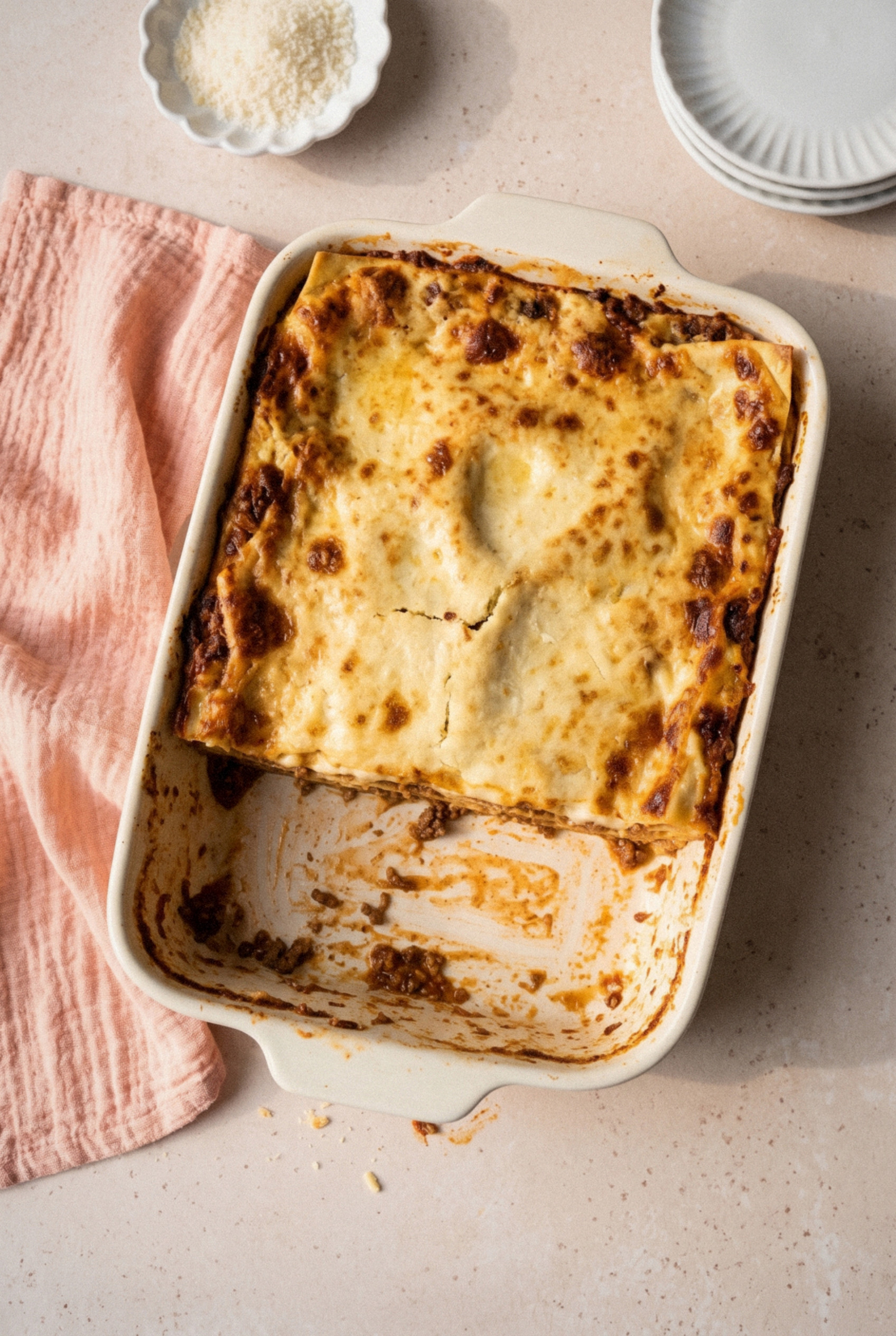
How to Make the Bolognese Ragu
The secret to a great Bolognese is patience and milk. The ragu needs about 2 hours of low simmering, but almost all of it is hands-off.
Build the Soffritto
Warm the oil and butter in a large, deep skillet or braiser over medium heat, then add the pancetta and cook for 4 to 5 minutes until it renders and turns golden. Stir in the onion, carrot and celery with a pinch of salt and cook for 10 minutes, until soft and lightly golden.
Brown the Meat Properly
Turn the heat to medium-high, add the beef and pork, and season with the 1 teaspoon salt. Break it up and let it cook for 10 to 12 minutes, until the moisture is gone and the meat is sizzling and browned in spots.
Okay, don’t rush this part!
Gray, steamed meat makes a flat ragu, while browned bits on the bottom of the pan mean flavor.
Milk, Then Wine, Then Tomato
Pour in the milk and simmer for 8 to 10 minutes, stirring now and then, until it has nearly all cooked away. Add the wine and scrape up the browned bits, then simmer another 5 minutes until most of it has evaporated.
Stir in the tomato paste for 1 minute, then add the passata, broth, bay leaf and pepper. Bring it to a gentle bubble, turn the heat to low and partially cover.
Simmer Low and Long
Let the ragu barely bubble for 2 hours, stirring every 20 minutes or so. If it starts to stick, add a splash of water.
Pro tip: the finished ragu should be thick and spoonable, with no watery pool when you drag a spoon through it, but still saucy enough to spread.
Fish out the bay leaf, taste for salt, and you’re done. The whole kitchen will smell out of this world!
How to Make the Bechamel
Bechamel takes about 15 minutes, and you can make it while the ragu simmers. If you’ve never made one, don’t be intimidated. It’s just a whisk and a little attention, I promise!
- Warm the milk. Heat the 4 cups milk in a small pot or the microwave until warming, not boiling.
- Cook the roux. Melt the 6 tablespoons butter in a medium saucepan over medium-low heat, whisk in the flour, and cook 2 minutes without letting it brown.
- Stream in the milk. Add the warm milk a ladle at a time at first, whisking constantly, then pour in the rest.
- Thicken. Simmer gently, whisking, for 6 to 8 minutes until it coats the back of a spoon.
- Season. Whisk in the salt and nutmeg, then take it off the heat.
It should pour off a ladle slowly, like heavy cream, which is thinner than you’d expect.
That’s on purpose, since it firms up in the oven and keeps the no-boil sheets tender.
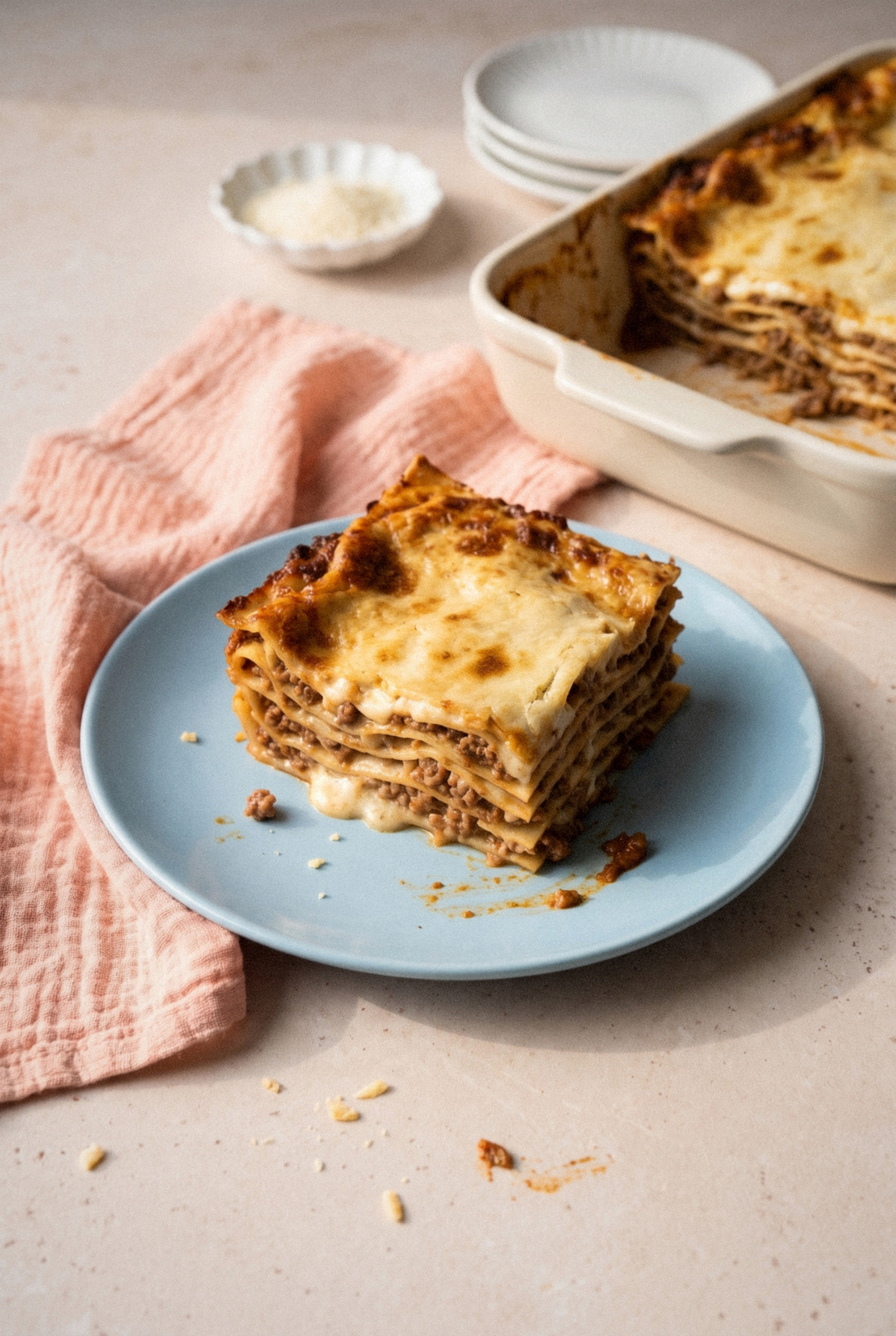
How to Assemble and Bake
Assembly takes about 15 minutes once both sauces are ready. Heat the oven to 375°F and set out your 13×9-inch baking dish.
Step 1: Butter the Dish and Start With Sauce
Rub the inside of the dish with a little of the 1 tablespoon butter. Spread about 3/4 cup ragu over the bottom with a thin drizzle of bechamel, so the first layer of pasta has something to soften in.
Step 2: Layer Pasta, Ragu, Bechamel and Parmigiano
Lay three no-boil sheets across the dish, leaving a little space between them. Spread on about 1 cup ragu, drizzle over 2/3 cup bechamel, and scatter 1/4 cup Parmigiano on top.
Repeat until you’ve built four layers this way. Keep each spread thin and even, right to the edges, because thin layers are what give you those clean squares later.
Step 3: Finish the Top
Add the fifth layer of sheets and cover them with the remaining ragu and all of the remaining bechamel, spreading it so no pasta peeks through. Sprinkle the rest of the Parmigiano over the top and dot with the remaining butter in small pieces.
Step 4: Bake, Then Rest
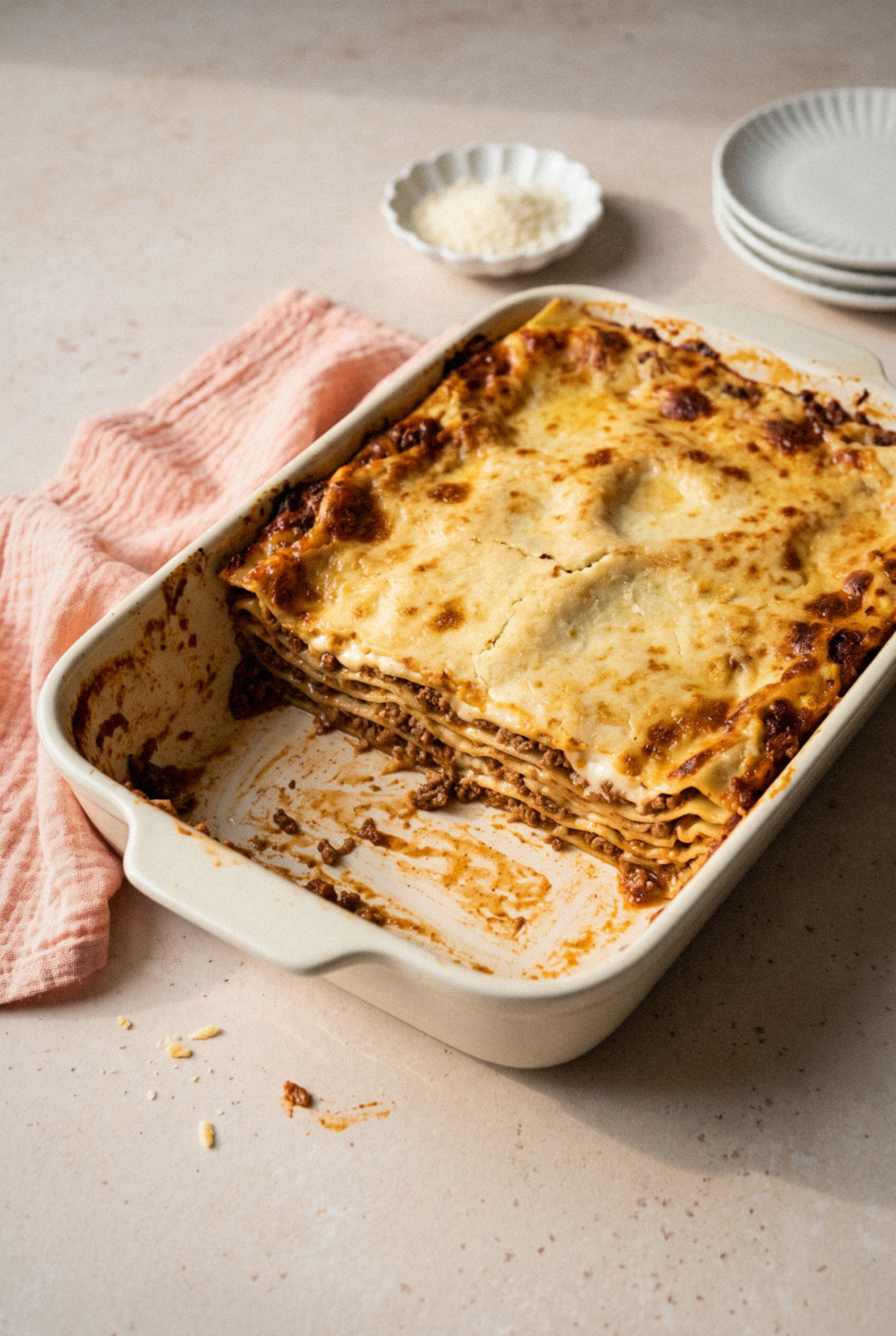
Cover the dish with foil and bake for 25 minutes, then uncover and bake another 20 to 25 minutes until the edges bubble and the top is golden with browned spots. Let it rest for 20 minutes before you cut it.
Twenty minutes feels like forever when it smells this good!
Worth the wait? Every single time, because that rest is what keeps the layers standing.
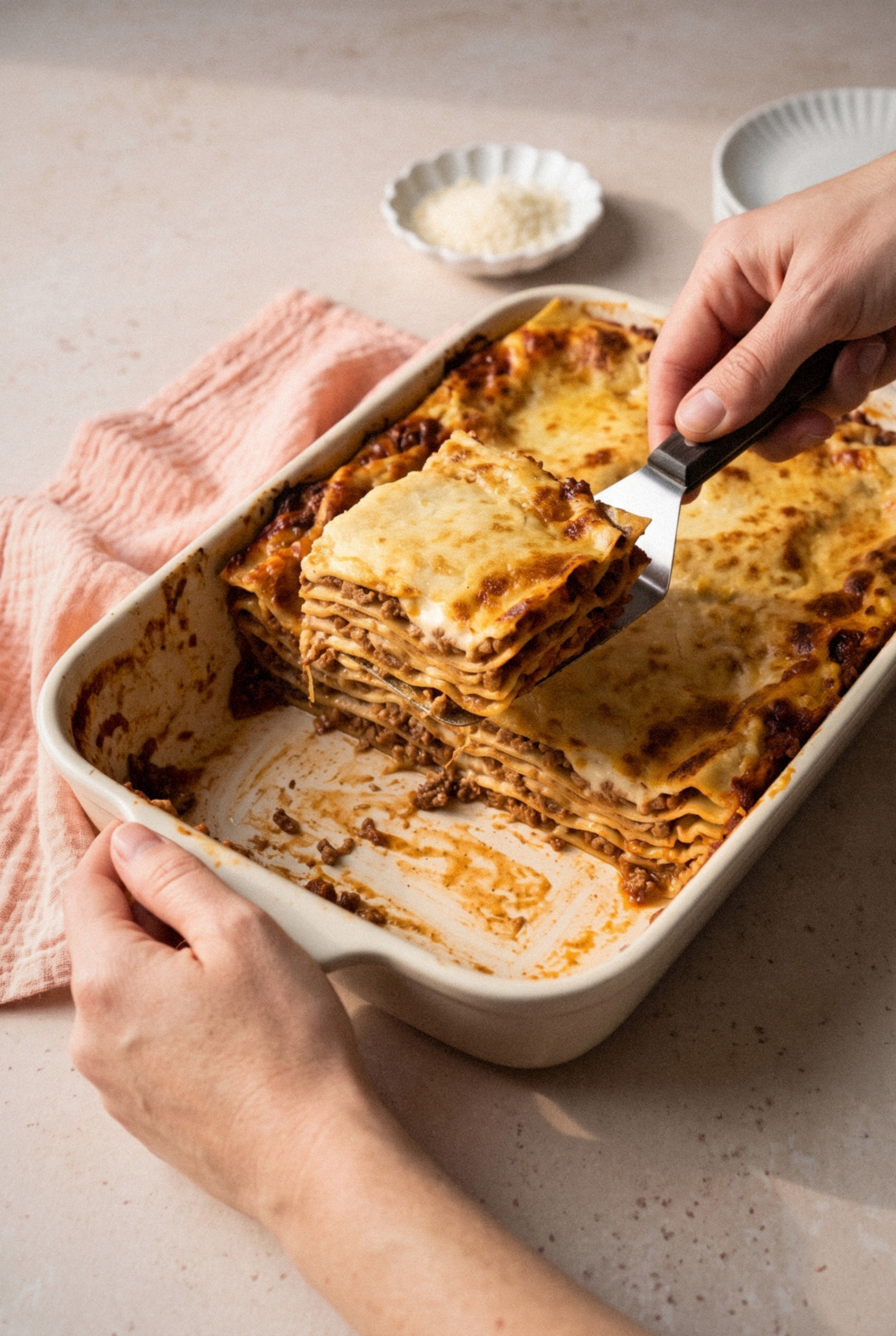
Tips for the Best Lasagna Bolognese
A few small habits make a big difference in the final pan. These are the ones I learned the hard way.
- Brown the meat, don’t warmth it. Wait for the sizzle and the browned bits. That’s where the deep, savory flavor comes from.
- Keep the layers thin. More thin layers beat fewer thick ones. You want each forkful to have pasta, ragu and bechamel in it.
- Salt every component. Taste the ragu and the bechamel on their own. If either tastes flat in the pot, it’ll taste flat in the dish.
- Cool the ragu a bit before layering. Warm is fine, but piping hot ragu makes the bechamel run into it instead of sitting in its own layer.
- Grate the cheese fine. A rasp grater gives fluffy Parmigiano that melts into every layer instead of sitting in clumps.
- Don’t skip the rest. It’s the easiest step in the whole recipe and the one people skip most.
Why Lasagna Squares Slump (and How to Fix It)
If your lasagna slides apart on the plate, one of three things went wrong. Good news, they’re all easy to fix!
- Watery ragu. If the sauce pools in the pan, it’ll pool in the dish too. Simmer it until a spoon dragged through leaves a clear trail.
- Thick bechamel layers. Too much white sauce in one spot turns into a slippery layer the squares slide on. Drizzle and spread it thin.
- Cutting too soon. Hot lasagna is basically lava. After 20 minutes the sauces set and a sharp knife gives you a clean edge.
I’ll admit I’ve done all three at once. It still tasted great, but it looked like a landslide!
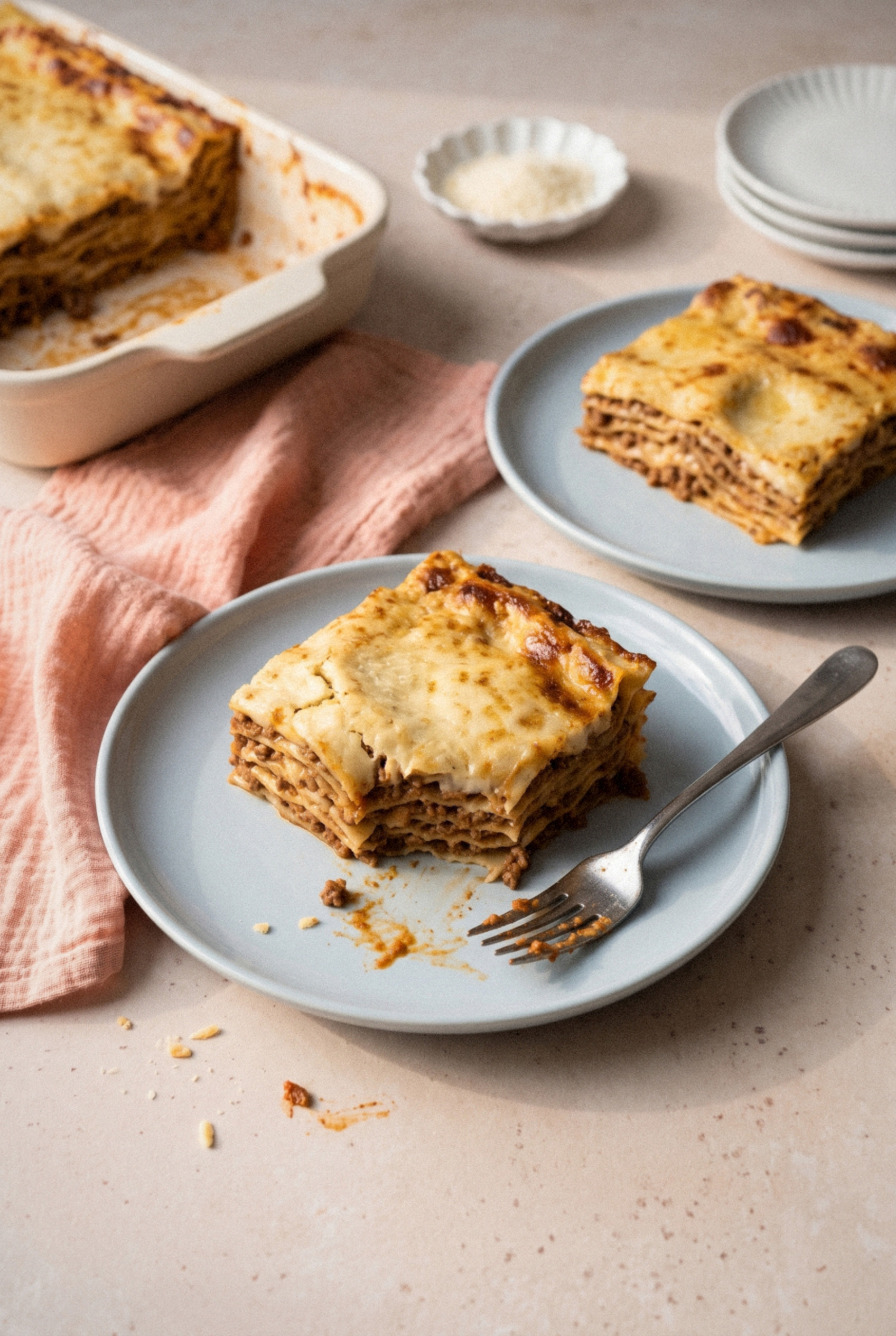
Variations
The classic version is my favorite, but this recipe bends well. Here are the swaps I’ve tried and liked.
- Lasagne verdi. Use fresh spinach pasta sheets for the traditional green Bologna look.
- All-beef ragu. Skip the pork and use 2 pounds ground beef. Keep the pancetta for flavor.
- A little mozzarella on top. For an American crowd, add 1 cup shredded mozzarella over the final Parmigiano layer. It’s not traditional, but it’s a crowd-pleaser!
- Ricotta bechamel. Whisk 1 cup ricotta into the finished bechamel for a creamier, richer layer.
- Smaller pan. Halve everything and bake in an 8×8-inch dish with three sheets cut to fit per layer. Start checking at 35 minutes total.
Make Ahead, Storage and Freezing
This is one of the best make-ahead dinners I know. It actually tastes better the next day, which makes it perfect for company!
- Two-day plan. Make the ragu on day one and refrigerate it. On day two, make the bechamel, assemble and bake.
- Ragu ahead. The ragu keeps 4 days in the fridge or 3 months in the freezer.
- Assemble ahead. Build the whole lasagna, cover tightly and refrigerate up to 24 hours. Add 10 to 15 minutes to the covered bake time since it goes in cold.
- Leftovers. Store covered in the fridge for up to 4 days.
- Freezing. Freeze it baked or unbaked, well wrapped, for up to 3 months. Thaw overnight in the fridge before baking or reheating.
- Reheating. Warm single squares covered in a 350°F oven for 20 minutes, or microwave for 2 to 3 minutes with a damp paper towel on top.
What to Serve With It
Lasagna Bolognese is rich, so I like something bright and simple beside it. You can’t go wrong with any of these.
- Green salad. Crisp lettuce with a sharp lemon or red wine vinaigrette cuts right through the bechamel.
- Roasted vegetables. Broccoli, green beans or zucchini roasted with olive oil and salt.
- Crusty bread. For mopping up every bit of ragu left on the plate.
- A glass of wine. Pour the rest of the bottle you cooked with. It pairs perfectly!
Lasagna Bolognese FAQ
What is the difference between lasagna and lasagna Bolognese?
American lasagna usually layers tomato meat sauce with ricotta and mozzarella. Lasagna Bolognese uses a slow meat ragu, creamy bechamel and Parmigiano-Reggiano, with thinner pasta and more layers.
What does lasagna Bolognese have in it?
Pasta sheets, a ragu of beef, pork and pancetta cooked with milk, wine and tomato, a butter and milk bechamel with nutmeg, and finely grated Parmigiano-Reggiano.
What is the secret to a great Bolognese?
Brown the meat well, cook the milk into it before the wine and tomato, and simmer it low for about 2 hours until it’s thick and spoonable.
Do you need to boil the noodles?
Not if you use no-boil sheets. Just make sure every sheet is fully covered in sauce, edges included. Regular dried noodles need a short boil first.
Can you add ricotta to lasagna Bolognese?
Yes, though it isn’t traditional. Whisk about 1 cup ricotta into the bechamel so the layers stay thin and even.
Can I make lasagna Bolognese ahead and freeze it?
Yes. Assemble it up to 24 hours ahead and refrigerate, or freeze it baked or unbaked for up to 3 months. Thaw overnight in the fridge before baking.
Lasagna Bolognese
Ingredients
For the Ragu
- 2 tablespoons olive oil
- 2 tablespoons unsalted butter
- 4 ounces pancetta finely diced
- 1 medium yellow onion finely diced
- 1 medium carrot peeled and finely diced
- 1 rib celery finely diced
- 1 pound ground beef 80/20 or chuck
- 1 pound ground pork
- 1 teaspoon kosher salt plus more to taste
- 1 cup whole milk
- 3/4 cup dry white wine or dry red wine
- 2 tablespoons tomato paste
- 28 ounces tomato passata or crushed tomatoes
- 1 cup chicken broth or water
- 1 bay leaf
- 1/4 teaspoon black pepper freshly ground
For the Bechamel
- 6 tablespoons unsalted butter
- 6 tablespoons all-purpose flour
- 4 cups whole milk warmed
- 1 teaspoon kosher salt
- 1/4 teaspoon nutmeg freshly grated
For Assembly
- 15 no-boil lasagna sheets about one 9-ounce box
- 2 cups Parmigiano-Reggiano finely grated, about 6 ounces
- 1 tablespoon unsalted butter for the dish and the top
Instructions
Make the Ragu
- Warm the olive oil and 2 tablespoons butter in a large, deep skillet or braiser over medium heat. Add the pancetta and cook 4 to 5 minutes until rendered and golden.
- Add the onion, carrot and celery with a pinch of salt. Cook 10 minutes, stirring, until soft and lightly golden.
- Raise the heat to medium-high. Add the ground beef and pork, season with 1 teaspoon salt, and break it up. Cook 10 to 12 minutes until the moisture is gone and the meat is browned in spots.
- Pour in the milk and simmer 8 to 10 minutes, stirring occasionally, until nearly all of it has cooked away.
- Add the wine and scrape up the browned bits. Simmer about 5 minutes until mostly evaporated.
- Stir in the tomato paste and cook 1 minute. Add the passata, broth, bay leaf and pepper. Bring to a gentle bubble, reduce the heat to low and partially cover.
- Simmer gently for 2 hours, stirring every 20 minutes and adding a splash of water if it sticks. The finished ragu should be thick and spoonable with no watery pool. Remove the bay leaf and season with salt to taste. Let it cool slightly.
Make the Bechamel
- Warm the 4 cups milk until warming. In a medium saucepan over medium-low heat, melt 6 tablespoons butter, whisk in the flour and cook 2 minutes without browning.
- Whisk in the warm milk a ladle at a time at first, then add the rest. Simmer gently, whisking, 6 to 8 minutes until it coats the back of a spoon. Whisk in the salt and nutmeg and remove from the heat. It should pour slowly, like heavy cream.
Assemble and Bake
- Heat the oven to 375°F. Butter a 13x9-inch baking dish with a little of the remaining 1 tablespoon butter.
- Spread about 3/4 cup ragu over the bottom of the dish and drizzle with a little bechamel.
- Lay 3 no-boil sheets across the dish, leaving small gaps. Spread on about 1 cup ragu, drizzle with 2/3 cup bechamel and sprinkle with 1/4 cup Parmigiano. Repeat to make 4 layers, spreading each thinly to the edges.
- Top with the final 3 sheets. Cover with the remaining ragu and all the remaining bechamel so no pasta shows. Sprinkle with the remaining Parmigiano and dot with the remaining butter.
- Cover with foil and bake 25 minutes. Uncover and bake 20 to 25 minutes more, until bubbling at the edges and golden with browned spots on top.
- Rest 20 minutes before cutting into 8 squares.
Notes
- Pasta: If using regular dried noodles, boil them 2 minutes less than the package directions and make 4 layers. Fresh egg or spinach pasta sheets should be blanched 30 to 60 seconds and patted dry.
- Make ahead: The ragu keeps 4 days in the fridge or 3 months frozen. The assembled lasagna can be refrigerated up to 24 hours; add 10 to 15 minutes to the covered bake time.
- Storage: Refrigerate leftovers up to 4 days. Freeze baked or unbaked up to 3 months and thaw overnight in the fridge.
- Reheat: Warm single squares covered at 350°F for 20 minutes, or microwave 2 to 3 minutes.
- Ricotta option: Whisk 1 cup ricotta into the finished bechamel if you like a creamier layer.