You peel back the foil, the top is bubbling, and the first square you cut slumps into a puddle of red sauce.
That sloppy first piece is exactly why I spent a whole winter tinkering with my classic ground beef lasagna.
Most of the popular recipes I tried answered the problem with more of everything: more sauce, more ricotta, more cheese piled on top.
More just made the puddle bigger.
I make this pan for my family on cold Sundays, and it has become the dinner my kids request for birthdays.
The fix turned out to be a handful of small, unglamorous choices.
I simmer an all-beef sauce with tomato paste until a spoon dragged through it leaves a clear trail.
The ricotta gets one egg and a handful of Parmesan, so it sets in the oven instead of oozing.
I pull the noodles from the water two minutes early, since they finish cooking in the pan.
Then comes the hardest part: a full 20-minute rest before anyone touches a knife.
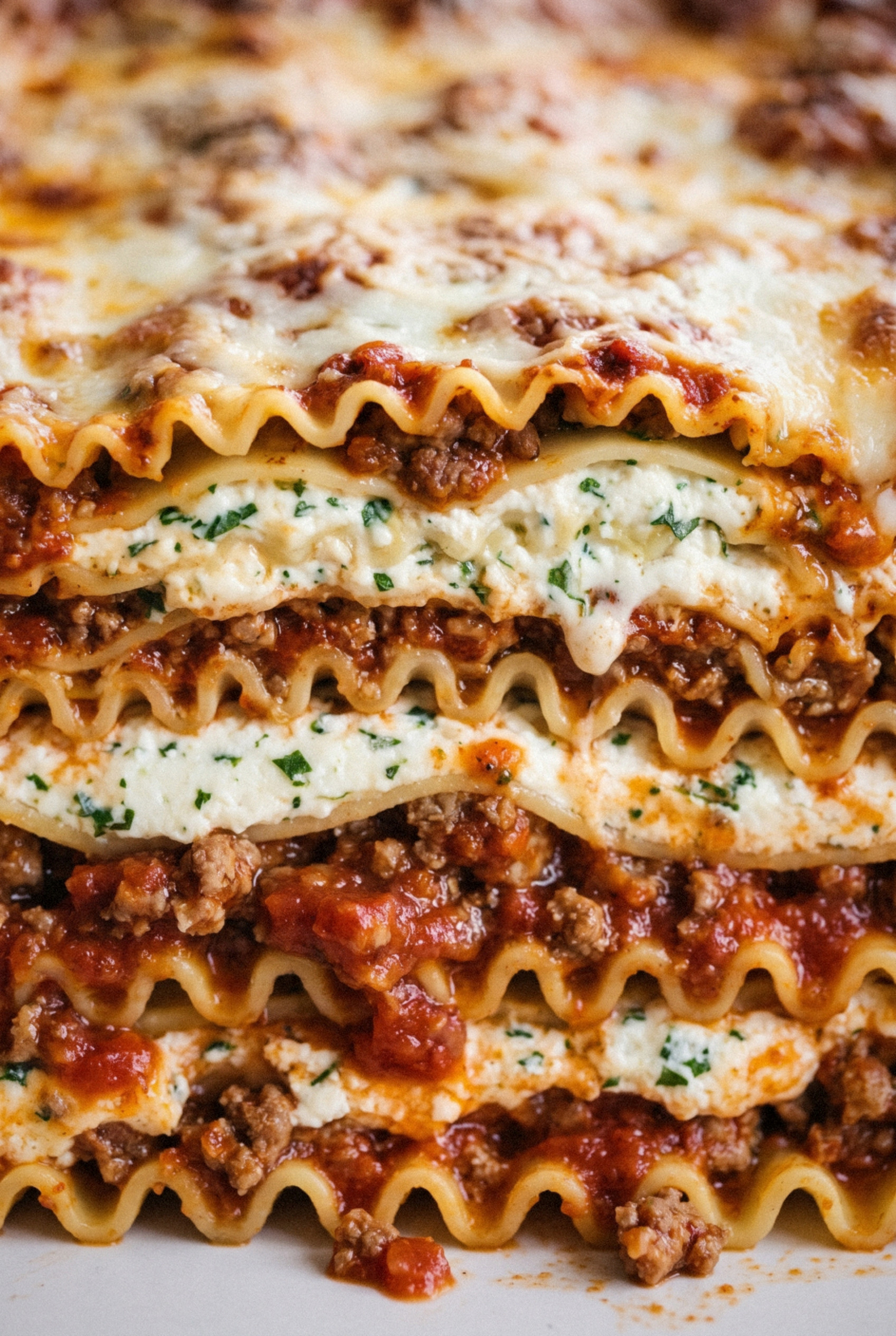
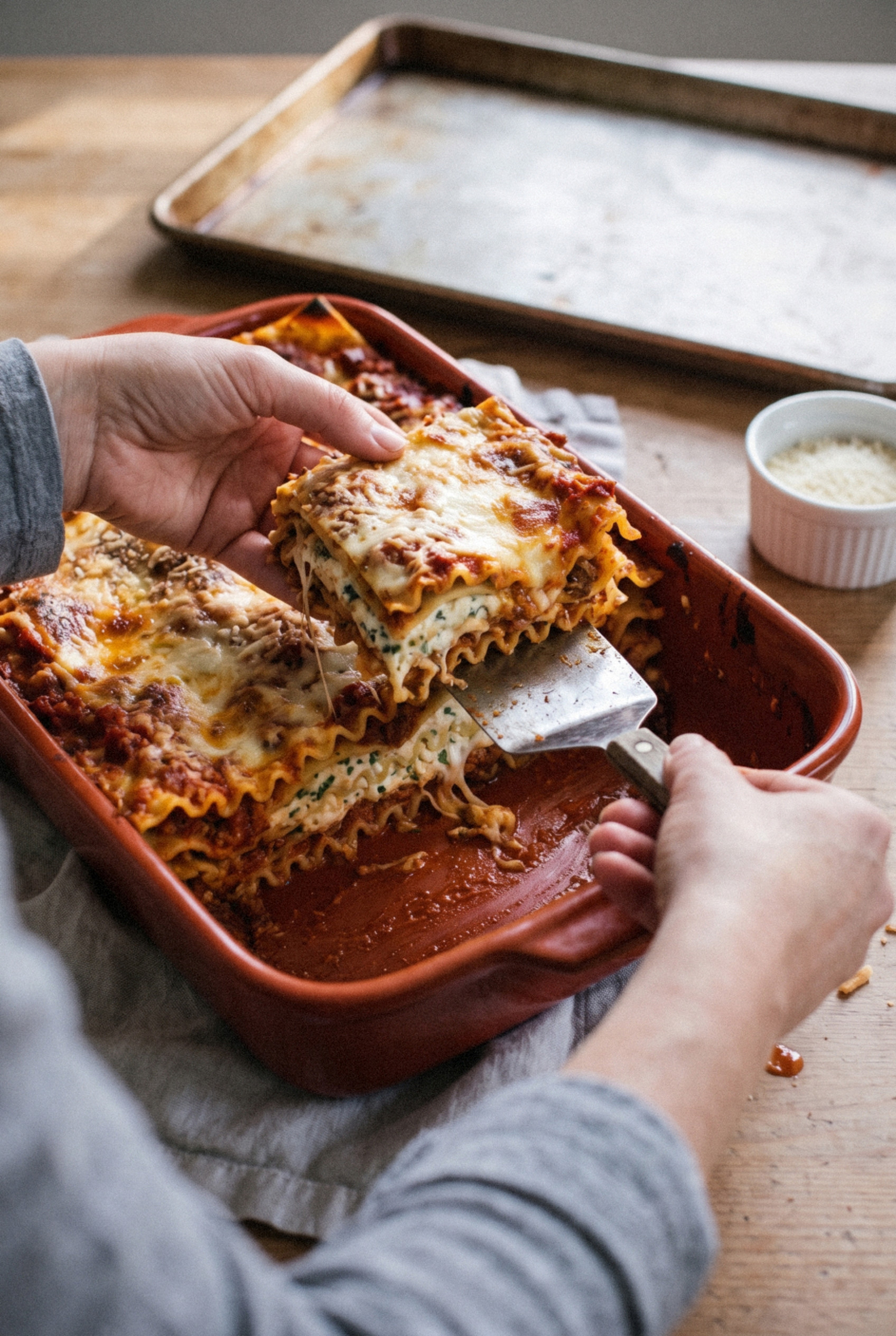
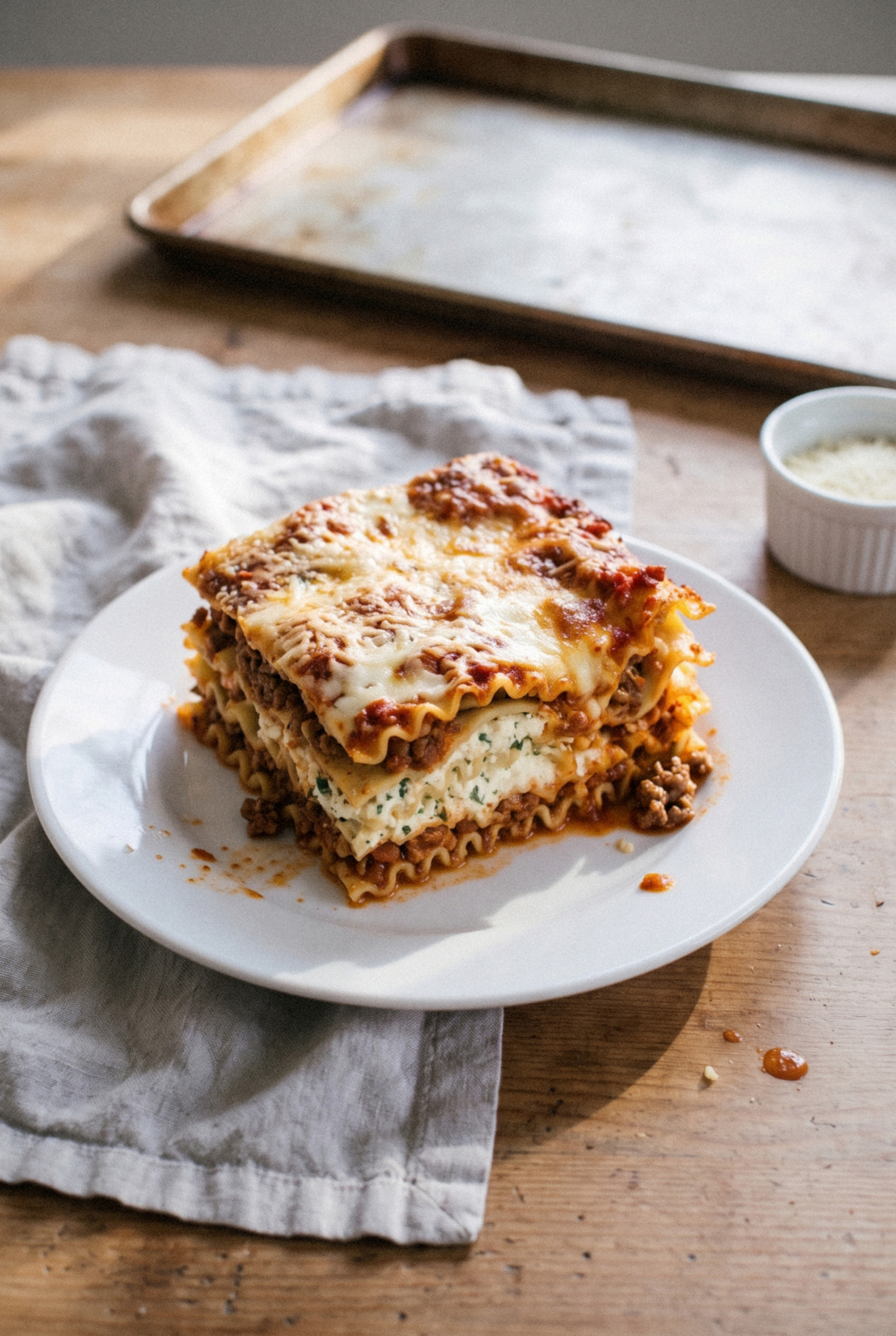
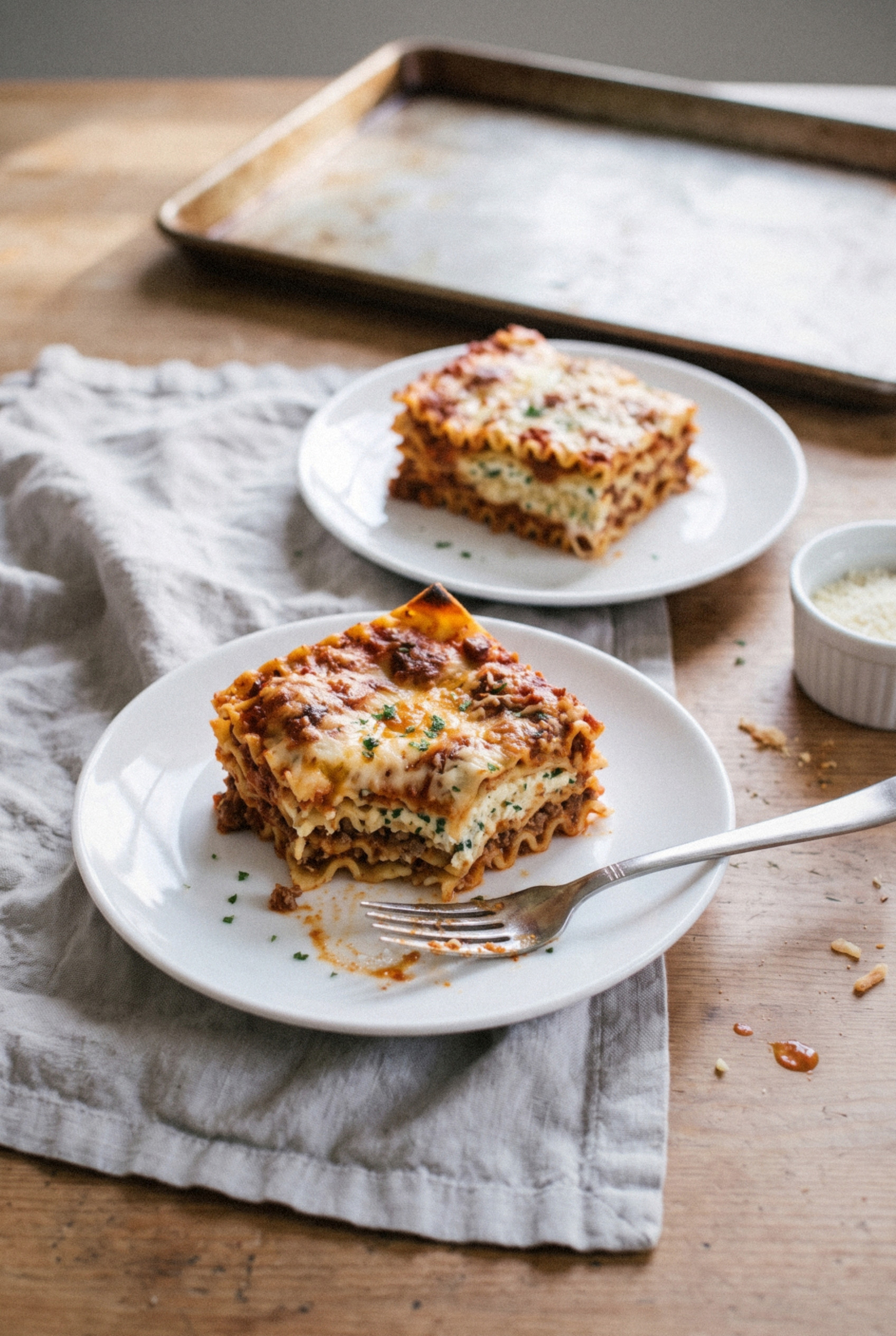
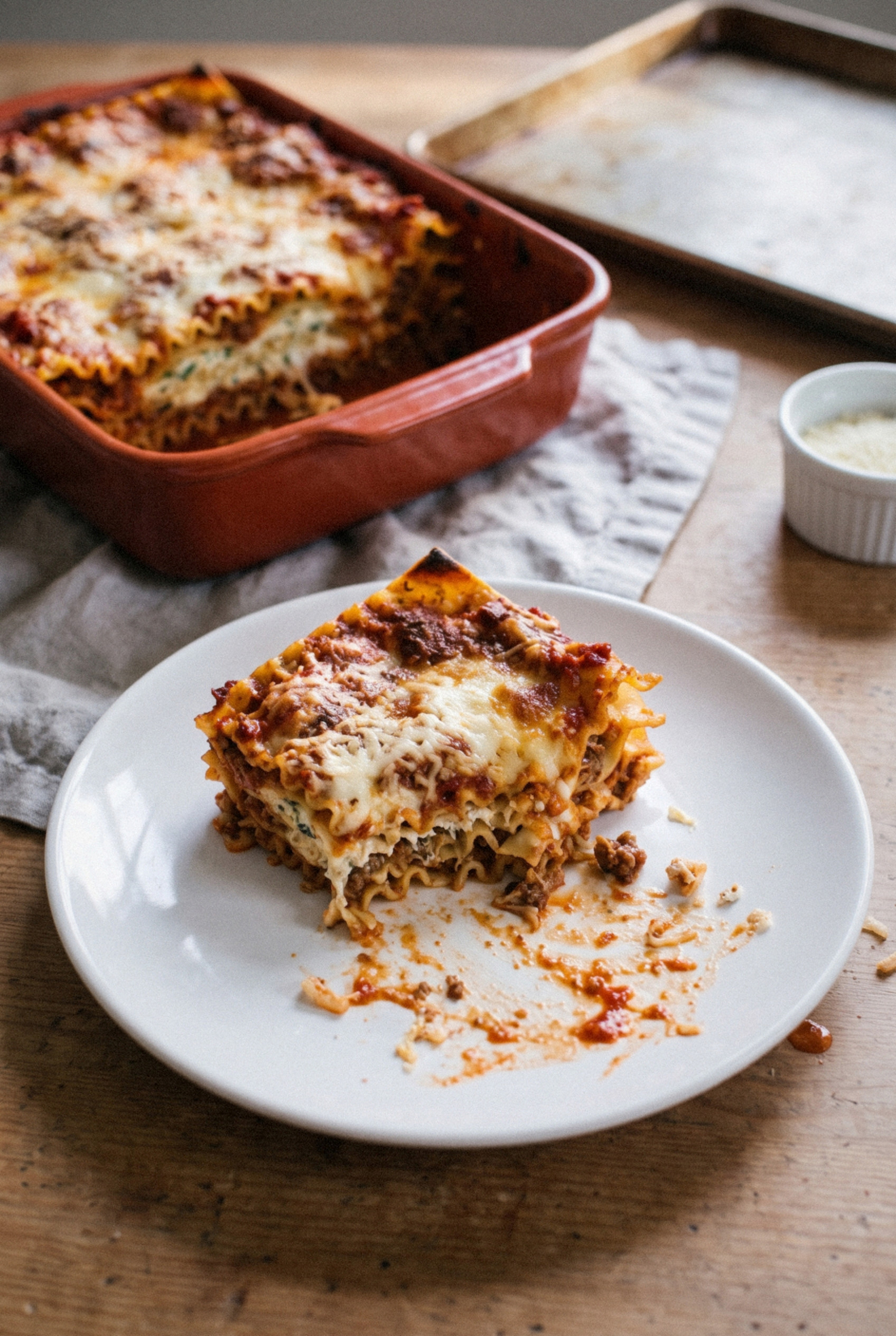
What you get is a square that stands up on the plate with every layer showing, from the white ricotta to the browned cheese on top.
One 9×13 dish feeds six to eight hungry people with leftovers to spare, and those leftovers reheat even better the next day.
Make it this way once and you won’t go back to the soupy version, I promise.
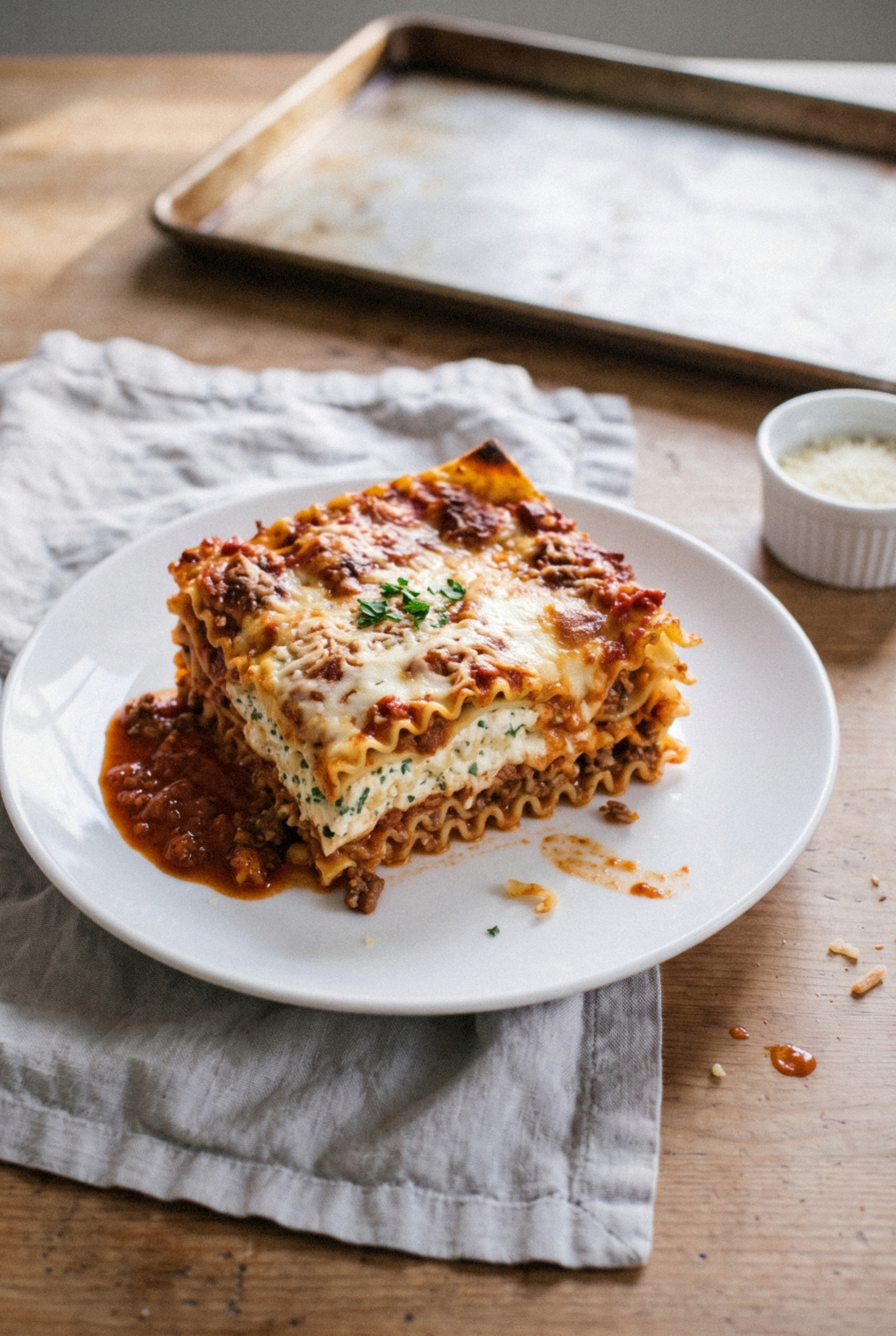
Table of contents
Why This Classic Lasagna Works
This is the lasagna I want on the table when I’m feeding a crowd. It’s the Italian-American classic most of us grew up with, and every choice in it serves one goal: a clean, tall slice.
- An all-beef sauce that isn’t watery. Tomato paste and a proper 15-20 minute simmer cook off the extra liquid that turns other lasagnas into soup.
- Jarred-sauce ease with homemade depth. A good jar of marinara plus a can of crushed tomatoes, onion, garlic and Italian seasoning tastes like it simmered all afternoon.
- Layers that hold. Thin, even layers of creamy ricotta and melted mozzarella stay put when you cut.
- Feeds a crowd. One 9×13 dish gives you 10 servings, which makes it a great way to handle a birthday dinner or a busy week.
- Freezer friendly. Assemble it, wrap it, and bake it weeks later with almost no difference in texture.
A little background: this layered ricotta-and-mozzarella style is the Italian-American version, built in the red-sauce kitchens of the early 1900s.
The northern Italian lasagne alla Bolognese from Emilia-Romagna is a different animal, with thin egg pasta, a slow ragù and creamy béchamel instead of ricotta.
Both are delicious. This one is the comfort food classic that shows up at every potluck and church supper in America.
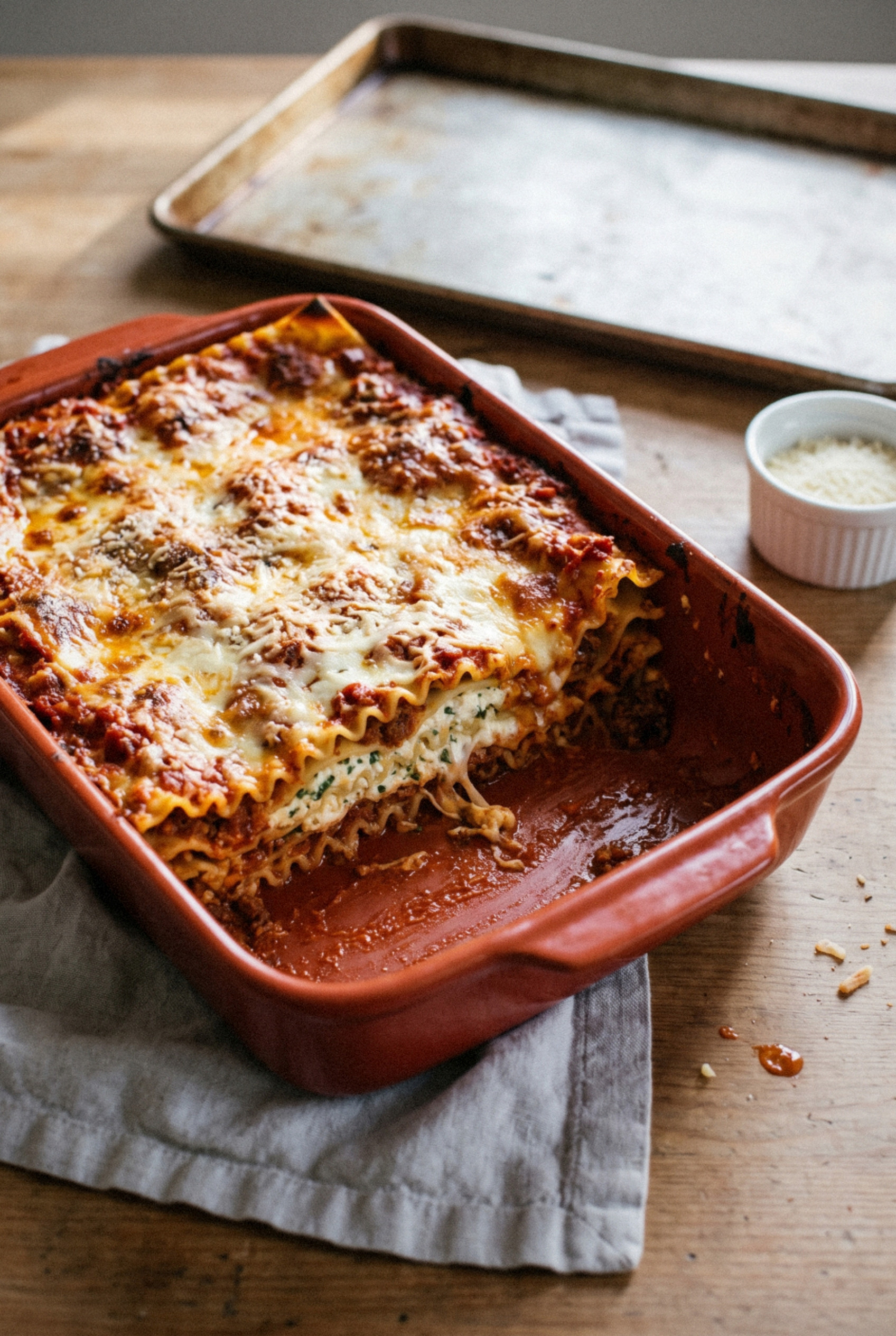
Ingredients for Classic Ground Beef Lasagna
Everything here is easy to find at a regular grocery store. I split the list into three parts so you can prep in order.
For the Meat Sauce
- Olive oil (1 tablespoon). Just enough to get the onion going before the beef releases its own fat.
- Ground beef (1 1/2 pounds, 85% lean). I like 85% because it has enough fat for flavor without leaving a greasy layer. If you use 80/20, drain it well.
- Yellow onion (1 medium). Finely diced so it melts into the sauce rather than sitting in chunks.
- Garlic (4 cloves). Freshly minced. The jarred stuff tastes flat here.
- Tomato paste (2 tablespoons). This is my secret weapon for a thick sauce. It adds body and a deeper, almost caramelized tomato flavor.
- Italian seasoning (2 teaspoons). Dried oregano, basil and thyme in one jar.
- Kosher salt and black pepper. 1 teaspoon salt and 1/2 teaspoon pepper to start, then taste.
- Marinara sauce (one 24-ounce jar). Use a brand you’d happily eat on plain spaghetti. If it tastes good from the jar, it’ll taste great here.
- Crushed tomatoes (one 15-ounce can). Stretches the sauce and gives it a fresher, brighter tomato taste.
For the Ricotta Filling
- Whole-milk ricotta (15 ounces). Whole milk is non-negotiable for me. Part-skim works, but it’s grainier and a bit watery.
- Egg (1 large). Binds the ricotta so it sets into a neat white layer instead of running.
- Parmesan (1/2 cup, freshly grated). Seasons the filling from the inside. Grate it yourself, since the pre-grated kind has an anti-caking coating that keeps it from melting smoothly.
- Fresh parsley (2 tablespoons, chopped). A little green freshness against all that richness.
- Kosher salt (1/4 teaspoon). Plain ricotta is bland without it.
Cottage cheese fan? Allrecipes’ version uses it, and it works. Blend it briefly for a smoother layer, or keep it as is for a slightly tangier, curdier texture.
For Assembly
- Lasagna noodles (12 regular, not no-boil). Regular dry noodles give you that classic chew with ruffled edges. Grab a 16-ounce box, since a few always break.
- Low-moisture mozzarella (3 cups shredded, 12 ounces). Low-moisture, not fresh. Fresh mozzarella releases water as it bakes. Shredding a block yourself gives a better melt.
- Parmesan (1/4 cup, freshly grated). Sprinkled over the top for those golden, browned spots.
- Fresh parsley. A light sprinkle at the end for color.
How to Make Classic Ground Beef Lasagna
Don’t be intimidated by the number of steps. Most of the time is hands-off, and the sauce, filling and noodles can all happen at once.
Step 1: Make the Meat Sauce
Heat the olive oil in a large, deep skillet over medium-high heat. Add the onion and cook for 3-4 minutes until it softens. Add the ground beef, break it into small crumbles, and cook for 7-8 minutes until no pink remains and it reaches 160°F.
Tip the pan and spoon off any pooled fat. Stir in the garlic, tomato paste and Italian seasoning and cook for 1-2 minutes, until the paste darkens slightly and coats the meat.
Pour in the marinara and crushed tomatoes, then add the salt and pepper. Bring it to a bubble, lower the heat to medium-low, and simmer uncovered for 15-20 minutes, stirring now and then.
Pro tip: Drag a spoon across the bottom of the pan. If the trail stays open for a second before the sauce slides back, it’s thick enough. You should end up with about 6 cups of sauce.
Step 2: Mix the Ricotta Filling
While the sauce simmers, stir the ricotta, egg, 1/2 cup Parmesan, chopped parsley and 1/4 teaspoon salt together in a medium bowl. Mix until smooth and evenly speckled with green. Set it aside in the fridge until you’re ready to layer.
Step 3: Boil the Noodles
Bring a large pot of generously salted water to a boil. Cook the noodles for 2 minutes less than the package says for al dente, stirring in the first minute so they don’t stick together.
Drain them and lay them flat on a lightly oiled baking sheet or a clean kitchen towel. They should still be firm and a little underdone, since they keep cooking in the sauce.
Worth babysitting the timer? Absolutely. Soft noodles turn to mush in the oven.
Step 4: How to Layer Lasagna
Heat the oven to 375°F. Spread 1 cup of meat sauce over the bottom of a 9×13-inch baking dish. This keeps the first noodles from sticking and scorching.
Lay 3 noodles lengthwise over the sauce, edges slightly overlapping. Dollop one third of the ricotta mixture over them and spread it into a thin, even layer. Sprinkle with 1/2 cup mozzarella, then spoon 1 1/4 cups of sauce on top.
Repeat that layer two more times: noodles, ricotta, mozzarella, sauce. Finish with the last 3 noodles and the remaining sauce, spread all the way to the edges so no pasta is exposed.
Here’s the full order at a glance:
- Bottom. 1 cup sauce.
- Layers 1, 2 and 3. 3 noodles, one third of the ricotta, 1/2 cup mozzarella, 1 1/4 cups sauce.
- Top. 3 noodles, remaining sauce. Hold back the last 1 1/2 cups mozzarella and 1/4 cup Parmesan.
Step 5: Bake and Rest
Cover the dish tightly with foil. If your foil touches the top, mist the underside with cooking spray so it doesn’t pull away the sauce. Bake for 45 minutes.
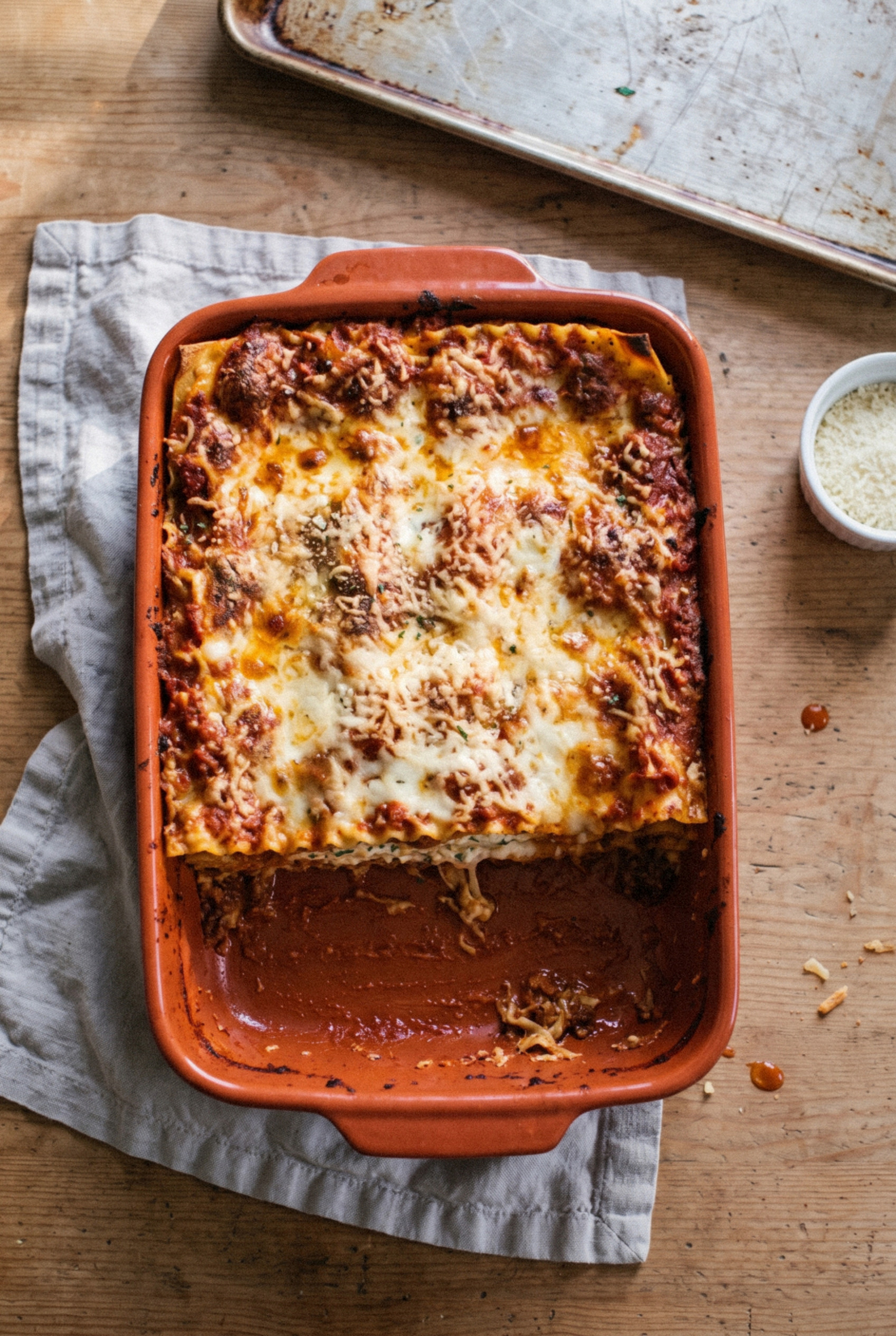
Uncover, sprinkle on the remaining 1 1/2 cups mozzarella and the 1/4 cup Parmesan, and bake for another 15 minutes, until the cheese is melted, bubbly and browned in spots. For deeper color, broil for 2-3 minutes and watch it closely.
Move the dish to a wire rack and let it rest for a full 20 minutes. Slice into 10 squares with a sharp knife and lift them out with a flat spatula.
Fair warning: the smell will have everyone hovering. Hold the line on the rest. It’s the difference between a clean slice and a sloppy one!
Tips for the Best Lasagna
These small habits make a bigger difference than any fancy ingredient. I learned most of them the messy way.
- Cook the sauce thicker than you think. It should look almost too thick in the skillet. The noodles and ricotta release moisture as they bake.
- Keep the cheese layers thin. A thin, even spread of ricotta holds better than big dollops, and it keeps the slice from tasting heavy.
- Drain the beef. Leftover fat floats to the top in the oven and leaves an orange slick on the cheese.
- Tent the foil. A greased or tented sheet of foil keeps the top layer of sauce in place instead of stuck to the lid.
- Check the noodles with a knife. Before you uncover it, slide a paring knife into the center. It should glide through with no resistance.
- Shred your own mozzarella. Bagged shreds are coated in starch and melt stringy and dull. A block melts glossy and smooth.
Common Lasagna Mistakes (and How to Avoid Them)
Every lasagna fail I’ve had traces back to one of these. The good news? Each one has an easy fix.
- Watery sauce. A thin sauce is the number one reason lasagna collapses. Simmer until the spoon-trail test passes, and skip any extra liquid like wine or water.
- Overcooked noodles. Fully cooked noodles turn mushy and limp after an hour in the oven. Pull them 2 minutes early.
- Too much ricotta. A thick ricotta layer turns soft and slippery and pushes the layers apart. One 15-ounce tub is plenty for a 9×13.
- Cutting it hot. Molten cheese and sauce need time to set. Rest it for 20 minutes, no shortcuts.
- Adding all the cheese at the start. Mozzarella that bakes for a full hour turns tough and greasy. Save the top layer for the last 15 minutes.
- Using fresh mozzarella. It’s lovely on pizza but releases a surprising amount of water into lasagna.
Variations
The base recipe is a classic for a reason, but it’s flexible. Here are the swaps I’ve tested and liked.
- Half beef, half Italian sausage. Swap 3/4 pound of the beef for mild or hot Italian sausage. You’ll get a sweeter, fennel-forward sauce.
- Add spinach. Stir 10 ounces of thawed frozen spinach, squeezed bone dry, into the ricotta mixture. Any water left in it ends up in your pan.
- Cottage cheese instead of ricotta. Use the same amount. It’s tangier and a little lighter.
- No-boil noodles. Skip the boiling step and add 1/4 cup of water to the sauce, since these noodles soak up more liquid. Bake covered for 50 minutes instead of 45.
- Other pasta shapes. Out of lasagna noodles? Cook ziti or penne 2 minutes short of al dente and layer it just the same.
- A little heat. Add a pinch of red pepper flakes with the garlic for a gentle kick.
Make Ahead and Freezing
Lasagna might be the best make-ahead dinner there is. Here’s my timeline so nothing gets guessed at.
- Make ahead (up to 2 days). Assemble through Step 4, cover tightly with plastic wrap and foil, and refrigerate. Add about 20 minutes to the covered bake time when it goes in cold.
- Freeze unbaked (up to 3 months). Assemble in a freezer-safe or foil pan, wrap it in two layers of plastic wrap and one of foil, and label it.
- Thaw. Move it to the fridge for 24-48 hours before baking. Remove the plastic wrap first, then bake as directed with the extra 20 minutes.
- Bake from frozen. In a pinch, bake it covered at 375°F for about 1 1/2 hours, then uncover, add the cheese and finish as usual.
- Freeze baked. Cool completely, cut into squares, and freeze them individually for grab-and-go lunches.
How to Store and Reheat Leftovers
Leftovers are arguably the best part. The flavors settle overnight and the slices get even neater.
- Fridge. Cover the dish or move squares to airtight containers. They keep for up to 4 days.
- Oven. Reheat squares in a covered baking dish at 350°F for 20-25 minutes, or about 30 minutes from frozen.
- Microwave. Add a teaspoon of water around the edges, cover loosely, and heat for 2-3 minutes, pausing halfway.
What to Serve with Lasagna
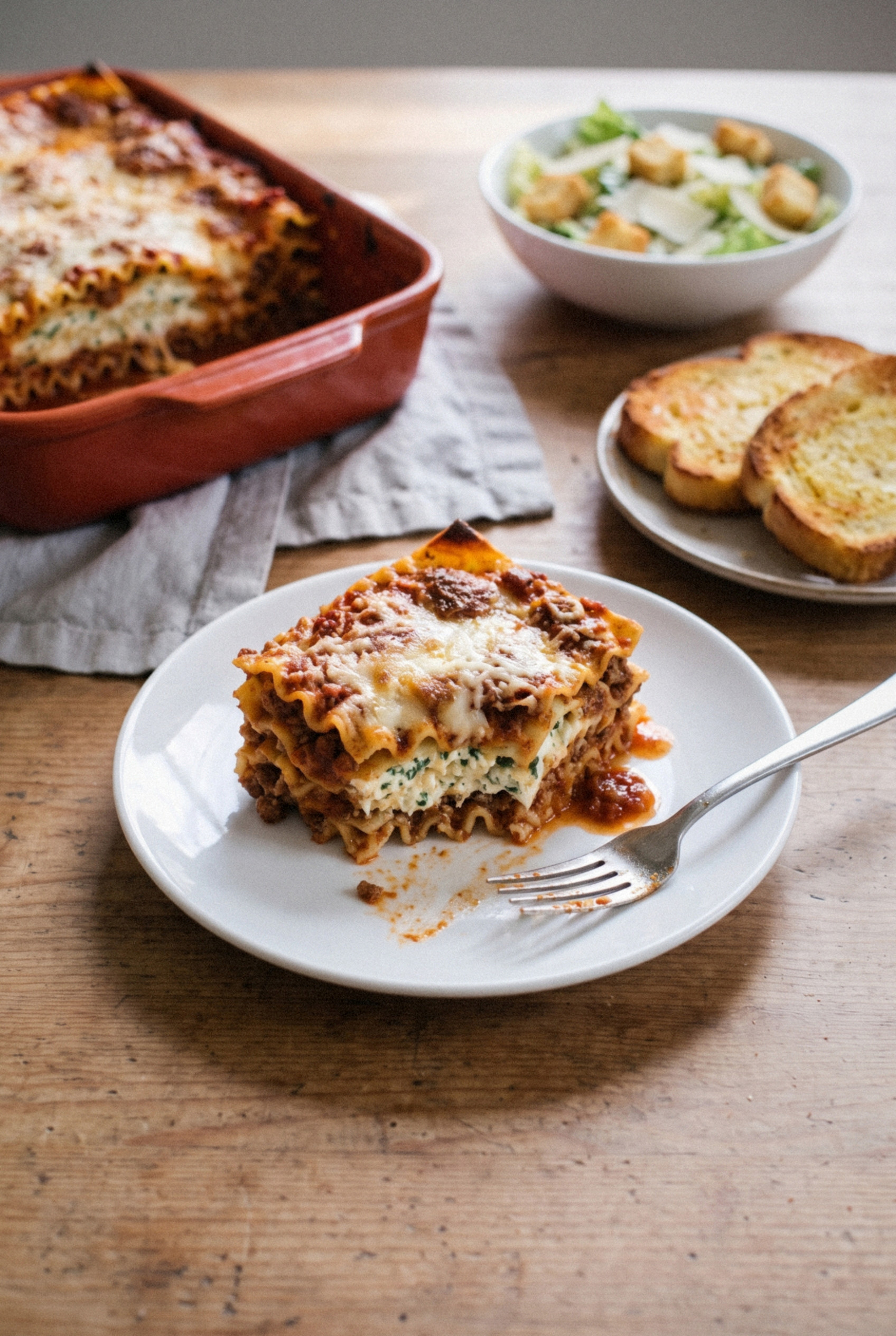
Lasagna is rich, so I like something crisp or green on the side. Any of these pairs perfectly.
- Caesar salad. Crunchy romaine and a garlicky dressing cut right through the cheese.
- Simple green salad. Mixed greens with a lemony vinaigrette keep things light.
- Garlic bread. Who doesn’t love garlic bread for mopping up sauce?
- Roasted broccoli. Charred at high heat with olive oil and a squeeze of lemon.
- Green beans. Sautéed with a little garlic for an easy weeknight side.
Classic Ground Beef Lasagna FAQ
What is the secret to making really good lasagna?
A thick sauce and patience. Simmer the meat sauce until it holds a spoon trail, keep the cheese layers thin, and let the baked lasagna rest for 20 minutes before cutting.
What are common mistakes to avoid when making lasagna?
The big ones are a watery sauce, fully cooked noodles, too much ricotta, and slicing it straight from the oven. Each one leads to a slice that slides apart on the plate.
Can I use no-boil noodles in this recipe?
Yes. Skip boiling, add 1/4 cup of water to the sauce, make sure every noodle is covered in sauce, and bake covered for about 50 minutes before adding the top cheese.
Is ricotta or cottage cheese better for lasagna?
Ricotta gives the classic creamy, mild layer most people expect. Cottage cheese is tangier and a little lighter. Both work, and both need the egg to set properly.
Why is my lasagna watery?
Usually a thin sauce, undrained beef fat, part-skim or fresh mozzarella, or spinach that wasn’t squeezed dry. Cutting it before it rests also makes it look runny.
Can I make lasagna the day before?
Definitely. Assemble it, wrap it tightly and refrigerate for up to 2 days. Add about 20 minutes to the covered bake time since it starts cold.
Give it a try this weekend. That first clean, tall slice is so worth the wait!
Classic Ground Beef Lasagna
Ingredients
For the Meat Sauce
- 1 tablespoon olive oil
- 1 medium yellow onion finely diced
- 1 1/2 pounds ground beef 85% lean
- 4 cloves garlic minced
- 2 tablespoons tomato paste
- 2 teaspoons Italian seasoning
- 1 teaspoon kosher salt plus more to taste
- 1/2 teaspoon black pepper
- 24 ounces marinara sauce 1 jar
- 15 ounces crushed tomatoes 1 can
For the Ricotta Filling
- 15 ounces whole-milk ricotta cheese
- 1 large egg
- 1/2 cup Parmesan cheese freshly grated
- 2 tablespoons fresh parsley chopped
- 1/4 teaspoon kosher salt
For Assembly
- 12 regular lasagna noodles not no-boil
- 3 cups low-moisture mozzarella cheese shredded (12 ounces), divided
- 1/4 cup Parmesan cheese freshly grated
- fresh parsley chopped, for garnish
Instructions
Make the Meat Sauce
- Heat the olive oil in a large, deep skillet over medium-high heat. Add the onion and cook 3 to 4 minutes until softened.
- Add the ground beef, break it into small crumbles, and cook 7 to 8 minutes until no pink remains (160°F). Spoon off any excess fat.
- Stir in the garlic, tomato paste, and Italian seasoning and cook 1 to 2 minutes until the paste darkens slightly.
- Add the marinara, crushed tomatoes, salt, and pepper. Bring to a bubble, then simmer uncovered over medium-low heat for 15 to 20 minutes, stirring occasionally, until thick enough that a spoon dragged across the pan leaves a trail. You should have about 6 cups.
Mix the Ricotta Filling
- In a medium bowl, stir together the ricotta, egg, 1/2 cup Parmesan, parsley, and 1/4 teaspoon salt until smooth. Refrigerate until ready to layer.
Boil the Noodles
- Cook the noodles in a large pot of well-salted boiling water for 2 minutes less than the package directions for al dente, stirring early so they don't stick.
- Drain and lay flat on a lightly oiled baking sheet.
Assemble
- Heat the oven to 375°F. Spread 1 cup of meat sauce over the bottom of a 9x13-inch baking dish.
- Lay 3 noodles over the sauce. Spread one third of the ricotta mixture over them, sprinkle with 1/2 cup mozzarella, and top with 1 1/4 cups sauce.
- Repeat the noodle, ricotta, mozzarella, and sauce layers two more times.
- Top with the last 3 noodles and spread the remaining sauce over them, covering the noodles completely.
Bake and Rest
- Cover tightly with foil (grease the underside if it touches the sauce) and bake for 45 minutes.
- Uncover, sprinkle with the remaining 1 1/2 cups mozzarella and 1/4 cup Parmesan, and bake 15 minutes more until melted, bubbly, and browned in spots. Broil 2 to 3 minutes for extra color if you like.
- Rest on a wire rack for 20 minutes. Garnish with parsley, cut into 10 squares, and serve.
Notes
- Thick sauce: The sauce should look almost too thick in the skillet. The noodles and ricotta release moisture as they bake.
- Make ahead: Assemble, cover, and refrigerate up to 2 days. Add about 20 minutes to the covered bake time.
- Freeze: Wrap the unbaked lasagna in plastic wrap and foil and freeze up to 3 months. Thaw in the fridge 24 to 48 hours, remove the plastic, and bake as directed with the extra 20 minutes.
- No-boil noodles: Skip boiling, add 1/4 cup water to the sauce, and bake covered 50 minutes.
- Storage: Refrigerate leftovers up to 4 days. Reheat covered at 350°F for 20 to 25 minutes.